A Crash Is Not Always Nobody’s Fault
People often use the word “accident” for every collision, from a fender bender in a grocery store parking lot to a highway pileup involving six vehicles and one very confused inflatable tube man.
In everyday conversation, “accident” simply means a crash. In a legal claim, however, the cause matters. A collision may be unavoidable, or it may have happened because someone ignored a basic safety rule.
A truly unavoidable event might involve a sudden medical emergency, an unexpected mechanical failure, or an animal darting into traffic. Even then, the details matter. A driver who knew the brakes were failing but kept driving may not be able to hide behind the word “accident.” Likewise, a motorist who felt faint but continued speeding through city streets may face difficult questions about whether the emergency was truly unforeseeable.
The key issue is not whether the crash was surprising. Almost every crash is surprising. The issue is whether a reasonably careful driver could have prevented it.
What Negligence Looks Like Behind the Wheel
Negligence is careless conduct that causes harm. It does not require a driver to have bad intentions. Most negligent drivers are not cartoon villains twirling a moustache while plotting a collision. They are ordinary people making dangerous choices, such as checking a text, rushing through an intersection, or driving after drinking.
A typical negligence claim examines four basic points:
- The driver had a legal duty to operate the vehicle safely.
- The driver failed to meet that duty.
- The failure caused the collision.
- The collision caused measurable harm.
Every driver on a Texas road owes other motorists, pedestrians, and passengers a duty to use reasonable care. That duty includes obeying traffic signals, controlling speed, watching the road, maintaining a safe following distance, and responding appropriately to traffic conditions.
A driver does not automatically become liable just because a crash occurred. Traffic is messy. Vehicles malfunction. Roads flood. Visibility disappears in a storm. The facts must connect the driver’s conduct to the injury.
For example, a driver traveling five miles per hour over the speed limit may not be responsible for every crash involving speeding. But if that extra speed prevents the driver from stopping before striking someone, it may become an important part of the claim.
The Difference Between Negligence and Recklessness
Negligence and recklessness are related, but they are not identical twins. Think of them as cousins who arrive at the same family reunion wearing completely different outfits.
Negligence usually involves carelessness. A driver looks down at a phone, misses a red light, and causes a collision. The driver may not have intended to hurt anyone, but the decision was unsafe.
Recklessness involves a more serious disregard for a known risk. Street racing, weaving through traffic at extreme speeds, or driving the wrong way on a highway may support a claim that the conduct was reckless.
Driving while intoxicated can also create serious legal consequences. Evidence of intoxication may strengthen an injury claim and, in some cases, support a request for exemplary damages. Those damages are not automatic, though. They require proof beyond ordinary carelessness.
The distinction can affect negotiations, trial strategy, and the types of damages a claimant may pursue. An insurance company may treat a routine mistake differently from conduct that looks outrageously dangerous.
How Fault Is Investigated After a Collision
Insurance adjusters rarely arrive with a magnifying glass and a dramatic detective hat. They still investigate, though, and their conclusions can influence the value of a claim.
A strong investigation may include:
- The crash report and any citations issued
- Photographs of vehicle damage, skid marks, debris, traffic signs, and road conditions
- Statements from passengers, pedestrians, and independent witnesses
- Traffic light or roadway camera footage
- Dashcam or nearby security video
- Cell phone records
- Vehicle event data, sometimes called a crash data recorder
- Medical records connecting injuries to the collision
- Employment records showing missed work or reduced earnings
- Inspection and maintenance records for the vehicles involved
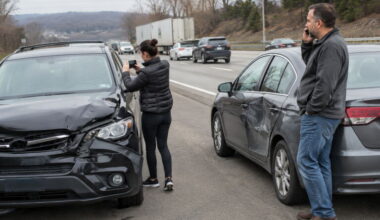
The car damage pattern and location may explain the impact. A shattered rear bumper may bolster a driver’s failure to stop claim. This does not prove the case. The other driver may claim the front vehicle reversed, changed lanes unexpectedly, or had broken brake lights.
That is why evidence should be gathered quickly. Skid marks fade. Vehicles get repaired. Businesses overwrite surveillance footage. Witnesses remember the crash with increasing confidence and decreasing accuracy, a combination that is less helpful than it sounds.
Why Insurance Companies Push Back
An insurance adjuster’s job is not to hand over the largest check possible because your neck hurts and the other driver has an unfortunate taste in bumper stickers. The adjuster evaluates risk, coverage, evidence, and the amount the insurer may have to pay.
Common arguments against a claim include:
- The injured person caused or contributed to the crash
- The injury existed before the collision
- Treatment was excessive or unrelated
- The claimant waited too long to see a doctor
- The vehicle damage was too minor to cause the reported symptoms
- The available insurance coverage is limited
- The claimant gave inconsistent statements
Some of these arguments may be valid. Others are simply bargaining tactics wearing a serious face.
In Texas, a person’s recovery can be reduced by their percentage of responsibility. If a claimant is found to be 20 percent responsible for $100,000 in damages, the award may be reduced to $80,000. A person who is more than 50 percent responsible generally cannot recover damages under Texas’s modified comparative fault rule.
That makes early statements important. Saying “I’m sorry” at the scene may be a polite reflex, but it can later be presented as an admission. A calm description of what happened is usually safer than guessing, apologizing, or announcing a full legal theory beside a smoking airbag.
Damages That May Be Available
A negligence claim can involve more than the cost of repairing a bumper. Depending on the evidence, recoverable damages may include:
- Emergency transportation and hospital bills
- Follow-up appointments and rehabilitation
- Prescription medication and medical equipment
- Future medical treatment
- Lost income
- Reduced ability to earn money in the future
- Vehicle repair or replacement costs
- Physical pain
- Emotional distress
- Disfigurement or permanent impairment
- Loss of normal activities
The value of a claim depends on its facts, not a magical statewide price tag. A short-lived strain with modest treatment is different from a spinal injury requiring surgery and lifelong care. Insurance limits also matter. A driver may be legally responsible for extensive harm but have little coverage available to pay it.
Uninsured and underinsured motorist coverage may become important when the at-fault driver has no insurance or not enough insurance. Whether that coverage applies depends on the policy and the circumstances of the crash.
Common Texas Driving Behaviors That Create Liability
Looking at a Phone Instead of the Road
A text message can wait. Unfortunately, many drivers treat a notification like a five-alarm emergency. Looking down for a few seconds can cover the length of a football field when a vehicle is moving at highway speed.
Entering an Intersection Too Aggressively
Running a red light or racing a yellow signal creates a serious risk of side-impact collisions. These crashes can be especially severe because the side of a vehicle offers less protection than the front or rear.
Driving Too Fast for Conditions
A posted speed limit is not a permission slip to drive at that speed through standing water, heavy fog, construction zones, or stopped traffic. Safe speed depends on what is happening around the vehicle.
Following With No Room to React
Tailgating turns ordinary traffic into a high-speed game of dominoes. If the vehicle ahead stops suddenly, a driver traveling too close may have no realistic chance to avoid impact.
Driving While Fatigued or Impaired
A tired driver can have delayed reactions, poor judgment, and brief periods of microsleep. Alcohol, illegal drugs, and some prescription medications can create similar dangers. A vehicle does not become safer merely because the person behind the wheel insists they “felt fine.”
Frequently Asked Questions
Is every rear end collision automatically the rear driver’s fault?
No. The rear driver is often investigated first because drivers must leave enough space to stop safely. However, fault can be disputed if the front vehicle reversed unexpectedly, stopped without a reasonable explanation, lacked functioning brake lights, or made a dangerous maneuver.
Can I bring a claim if I was partly responsible?
Possibly. Texas generally permits recovery when the injured person is not more than 50 percent responsible. The amount recovered may be reduced according to the person’s assigned percentage of fault.
What if the other driver was never ticketed?
A citation can help, but it is not required for a civil negligence claim. Police officers do not decide every issue that matters in an injury case, and a lack of citation does not prove that the driver acted carefully.
Does an insurance settlement cover future medical treatment?
It can, if future treatment is supported by reliable medical evidence and included in the claim. Once a settlement is signed, additional compensation is usually unavailable, so future care should be evaluated before resolving the case.
What makes a crash legally unavoidable?
A crash may be considered unavoidable when it resulted from an unexpected event that a reasonably careful driver could not prevent. The precise facts matter, including the driver’s speed, attention, vehicle maintenance, reaction time, and knowledge of any existing danger.