Trees are usually excellent neighbors. They provide shade, filter the air, and stand around looking dignified while everyone else mows the lawn. But even the most majestic oak can become a serious hazard when disease, structural weakness, storm damage, or poor growing conditions enter the picture.
A tree does not need to be completely dead to cause trouble. One weak limb over a driveway can damage a vehicle. A leaning trunk near a bedroom window can turn a windy night into a noisy and expensive adventure. Smart property care begins with recognizing danger early and understanding which problems require immediate attention.
Think Like a Tree Risk Detective
Tree safety starts with observation. Walk around your property several times each year and study each tree from different angles. Look upward, outward, and down at the ground around the trunk. A quick glance from the kitchen window may miss the branch that is quietly plotting against your roof.
Pay close attention to changes. A tree that suddenly leans more than it did last season may have root trouble or unstable soil. Cracks that run vertically along the trunk can signal serious structural weakness. Deep cavities, loose bark, and areas where wood appears soft deserve professional attention.
The ground can provide clues too. Raised soil, cracked earth, or a slight mound near the base may indicate that roots have shifted. Freshly exposed roots can become damaged by lawn equipment, construction, or erosion. Trees are not fond of having their foundations disturbed, much like people are not fond of someone removing the floor beneath their favorite chair.
Identify What Could Be Damaged
A tree becomes more dangerous when it can fall onto something valuable or occupied. This area is sometimes called the target zone, and it includes anything that could be harmed if a branch or trunk comes down.
Walk around each tree and note nearby targets such as:
- Houses and garages
- Sidewalks and driveways
- Children’s play areas
- Outdoor seating
- Fences and sheds
- Power lines
- Vehicles
- Neighboring property
A healthy tree in an open field may present little immediate risk. The same tree beside a busy walkway requires closer management. Consider how people and vehicles move through the property during the day. A branch above a rarely used corner may be less urgent than one above the path everyone takes to reach the front door.
You can reduce exposure by moving outdoor furniture, parking vehicles elsewhere, or redirecting foot traffic. These actions do not repair the tree, but they create breathing room while the situation is evaluated.
Understand the Trouble with Heavy Branches
Large limbs can look strong while hiding internal decay. A branch may have healthy leaves at its tip and still contain weak wood near the trunk. Branches with narrow attachment points are especially concerning because they can split under wind, ice, or the weight of wet foliage.
Look for limbs that rub against one another. Repeated rubbing removes bark and creates openings where insects and decay organisms can enter. Branches with unusual bends, long cracks, or hanging sections should not be climbed, pulled, or cut casually.
Poor pruning can cause future issues. Removing too much foliage at once can stress a tree, and cutting branches tight against the trunk can damage the healing zone. Topping often causes loosely attached replacement growth after removing substantial parts of the upper crown. The tree may appear smaller, then return with loose branches.
A trained tree professional can determine which limbs should be removed and how to make cuts that support long term structure.
Give Roots the Respect They Deserve
People often focus on trunks and branches because they are easy to see. Roots, however, provide the underground engineering system that keeps a tree upright. They anchor the tree, absorb water, and help store energy.
Compacted soil can limit root growth. Construction equipment, repeated driving, patios, and storage materials can press soil tightly around the root zone. Even a temporary pile of bricks or building supplies can create trouble if it blocks air and water from reaching the roots.
Avoid digging near established trees unless the work has been carefully planned. Cutting several major roots can destabilize a tree months or years before the problem becomes obvious. Raising or lowering soil levels around the trunk can also interfere with oxygen exchange and moisture balance.
Instead of stacking against the trunk, mulch should be placed in a broad, shallow layer to conserve moisture. Although spectacular, a volcano-shaped mulch pile can trap moisture against the bark and cause rot. Trees prefer a delicate coating of mulch, not an ankle-deep tropical island.
Prepare Before Wind and Rain Arrive
Storm preparation should happen while the sky is calm and the lawn is not attempting to swim. Before the storm season begins, inspect trees for dead limbs, weak forks, and branches touching buildings or utility lines.
Check whether drainage problems are leaving the soil saturated around a tree. Waterlogged ground may reduce root stability, particularly when strong winds push against a large canopy. At the other extreme, prolonged drought can weaken trees and cause branches to become brittle.
Stakes can support young trees while their root systems develop, but they shouldn’t be too long or too tight to shift the trunk. Young trees grow stronger with gentle movement. A tree strapped rigidly may become dependent on its support, like a person who always carries a lucky umbrella.
After severe weather, stay away from hanging branches and damaged trees until the area is safe. A limb caught in another branch can fall later without warning. Trees near electrical wires require special caution and should be handled by properly qualified professionals.
Know When Do It Yourself Is Not Wise
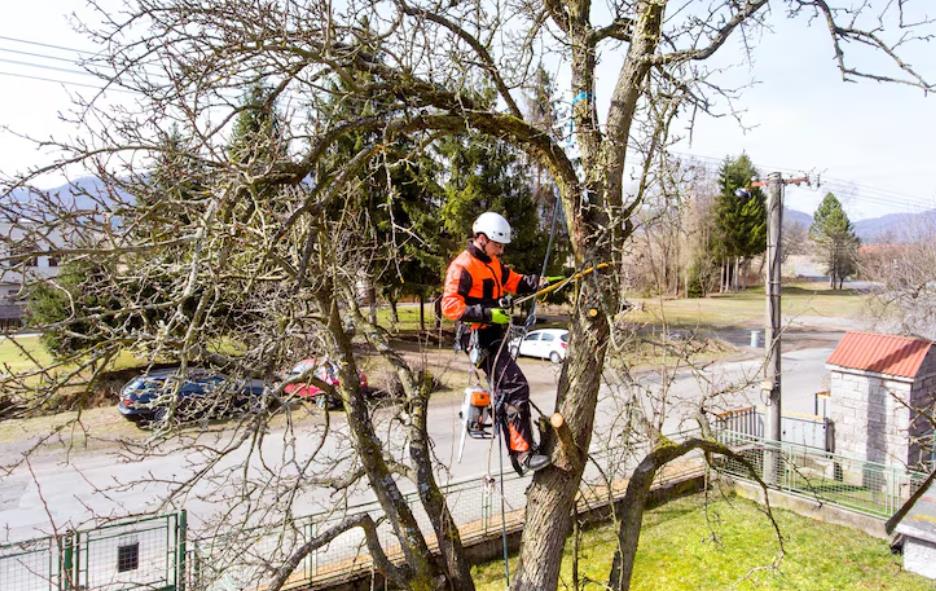
Small pruning jobs may be manageable with the right knowledge and equipment, but tree work becomes dangerous quickly. Working at height, handling chainsaws, and cutting heavy limbs require training, planning, and an understanding of how wood will move after a cut.
Do not climb a damaged tree to remove a hanging branch. Do not pull on a limb with a rope while standing beneath it. Do not attempt to cut a tree leaning toward a house simply because the chainsaw is available and optimism is abundant.
Professional help is particularly important when a tree is large, unstable, close to a structure, entangled with utility lines, or damaged after a storm. A qualified tree specialist can assess the trunk, crown, roots, and surrounding targets before deciding whether pruning, cabling, removal, or another solution is appropriate.
Manage Diseased and Pest Damaged Trees
Insects and diseases can quietly change a tree’s strength. Holes in bark, sawdust near the trunk, thinning foliage, peeling bark, and clusters of dead twigs may indicate a larger problem. Some infections affect leaves first, while others attack roots or the internal wood.
Try not to think that every discolored leaf implies the tree is doomed. Seasonal changes, drought, soil issues, and aging can cause similar symptoms. Observing patterns and changes rather than reacting to one suspicious leaf that had a rough morning is key.
Remove fallen branches from areas where they could hide hazards, but avoid moving large damaged limbs yourself. If disease or pests are suspected, professional identification can prevent unnecessary removal and reduce the chance of spreading the problem to nearby trees.
Keep a Simple Property Tree Record
A written record makes tree care more organized. Note the tree species if known, its location, visible defects, pruning dates, storm damage, and any professional evaluations. Take photographs from the same positions each season so changes are easier to spot.
Mark trees that need follow up attention and record whether a branch was removed or a structural concern was repaired. This prevents the classic property care mystery where everyone remembers that “someone was going to deal with that tree,” but nobody remembers who, when, or whether the tree received the message.
A maintenance record is especially useful for properties with many mature trees. It helps owners prioritize urgent hazards, plan seasonal work, and avoid repeating the same inspection from scratch every time.
FAQ
How often should trees be inspected for safety?
Inspect trees at least twice a year, ideally in spring and after the most severe local storm period. Additional checks are wise after strong winds, lightning, flooding, construction, or visible changes in the tree’s condition.
Is a leaning tree always dangerous?
Not always. Some trees naturally grow at an angle, especially when they develop that way from a young age. A new or worsening lean, exposed roots, cracked soil, or movement at the base is more concerning and should be evaluated promptly.
Can I remove a dead branch myself?
Small branches that can be reached safely from the ground may be manageable with proper tools and technique. Avoid cutting large, heavy, elevated, or cracked limbs. Never work near utility lines or climb a damaged tree.
What should I do if a tree falls during a storm?
Keep people and pets away from the fallen tree and any hanging branches. Treat nearby electrical wires as energized, even if they appear inactive. Contact the appropriate emergency or utility service, and do not begin cutting until the area has been declared safe.
Does removing a tree solve every safety problem?
Removal eliminates the hazard from that particular tree, but the stump, roots, nearby trees, and damaged structures may still require attention. The surrounding area should be inspected so hidden risks are not left behind like an unpleasant surprise in the garden.