Critical Signs You Need Emergency HVAC Support
Maintaining a comfortable and safe indoor environment is a top priority for every homeowner, especially when it comes to the air we breathe. In recent years, public health concerns have shifted our focus toward how our home and office ventilation systems can actively help protect us from airborne pathogens. A common question we hear is: What MERV rating do I need for COVID-19?
While achieving the right balance of filtration is vital, many people are unsure if their current system can handle high-efficiency filters without causing mechanical stress. An improper filter choice can lead to significant airflow restriction, which puts unnecessary strain on your blower motor and can eventually cause your system to fail entirely.
In this guide, we will explore the science behind air filtration ratings and how to choose the right level of protection without compromising your system’s health. We will also discuss how to recognize when a filter issue has escalated into a system-wide problem that requires urgent heating repair. Whether you are looking to improve your indoor air quality or you are currently facing a total system breakdown, understanding the link between filtration and HVAC performance is the first step toward a safer, more reliable home.
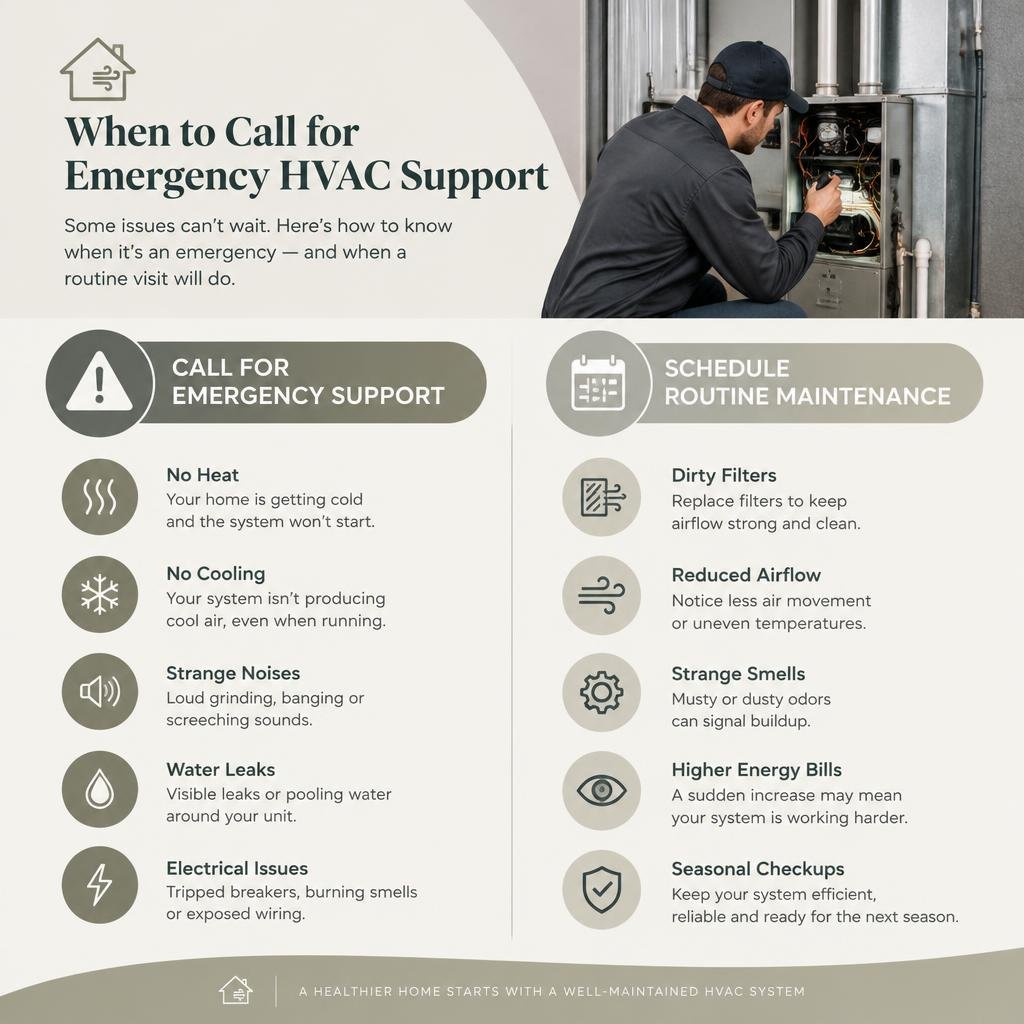
Your HVAC system is a complex network of electrical components, mechanical parts, and airflow pathways. When one part fails, it often creates a domino effect that impacts the entire unit. Recognizing the difference between a minor operational hiccup and a true emergency is essential for your family’s safety and the longevity of your equipment.
Identifying When Heating Failure Requires Emergency HVAC Support
During the peak of winter, a heating failure is more than just an inconvenience—it is a significant threat to your home’s structural integrity and your family’s health. If your furnace fails to ignite, or if you notice that the air coming from your vents is consistently cold when the heat is set to high, you may be dealing with a cracked heat exchanger or a failed ignition board.
In sub-freezing conditions, the risk of pipes freezing and bursting increases rapidly once the indoor temperature drops. If you find yourself in this situation, do not wait for the next business day. Seeking professional assistance for urgent heating repair is necessary to prevent further damage to your property. Furthermore, if you suspect your heat exchanger is compromised, the system must be shut down immediately to prevent the potential leakage of carbon monoxide into your living space.
Electrical Hazards, Gas Leaks, and Immediate Safety Threats
Some signs of an HVAC emergency are unmistakable and require immediate action. If you smell gas near your furnace or boiler, evacuate the home immediately and contact your utility provider. Similarly, if you notice a burning, plastic-like smell coming from your vents, or if you hear loud, persistent buzzing or clicking noises, these are often indicators of electrical arcing or a failing motor.
If you observe these symptoms, your first step should be to use your home’s emergency shutoff switch usually located on the side of the furnace or in the main breaker panel. Do not attempt to reset the breaker repeatedly if it keeps tripping; this is a safety feature designed to prevent electrical fires caused by a short circuit or an overloaded motor.
High-Resistance Airflow and Component Strain: The Filtration Link
The relationship between your air filter and your HVAC system’s health is often misunderstood. To understand the answer to “what MERV rating do I need for COVID-19,” you must first understand how filters work. The Minimum Efficiency Reporting Value (MERV) scale ranges from 1 to 16. While a MERV 13 filter is the industry-recommended minimum for capturing virus-laden aerosols, it is also a “denser” filter than the standard MERV 8 options found in many older homes.
Severe Airflow Restriction and Blower Motor Burnout
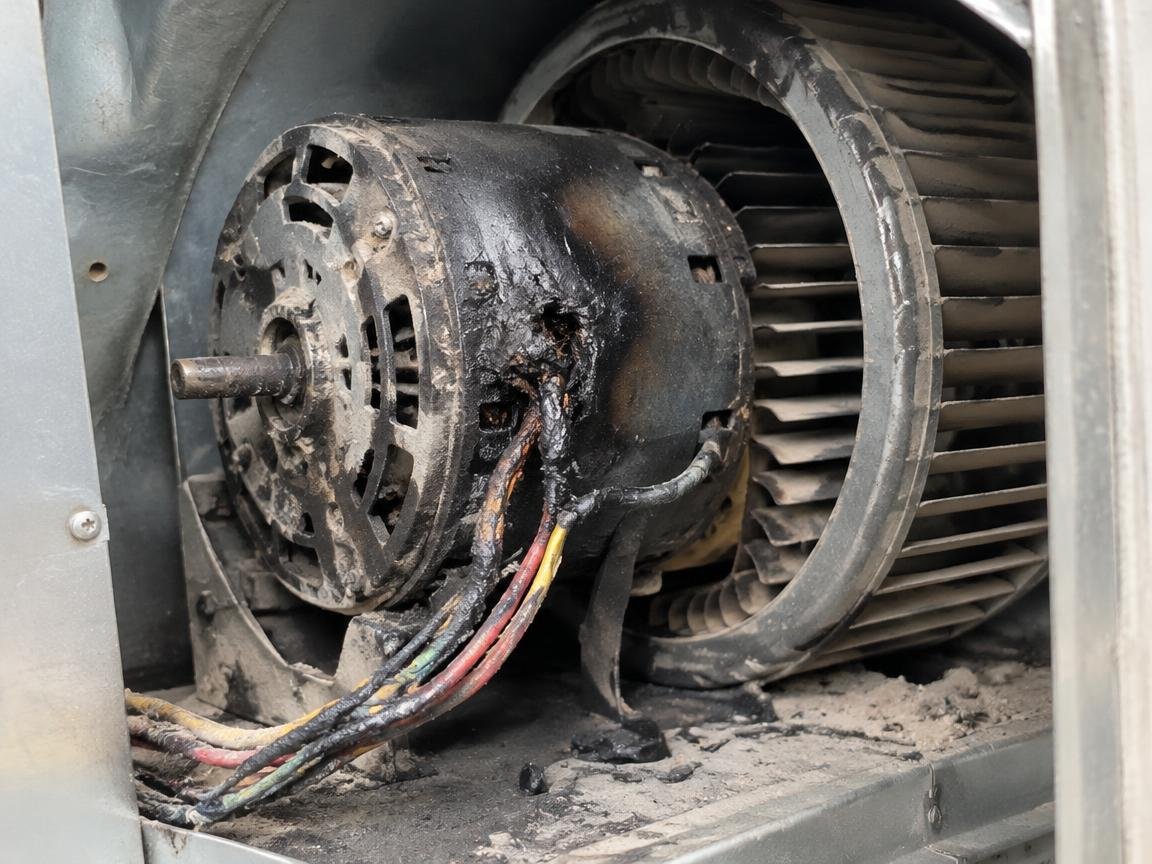
When you install a high-MERV filter, you are essentially creating a tighter “net” for air to pass through. If your HVAC system was not designed to accommodate this increased resistance, it creates what engineers call high static pressure. The blower motor must work significantly harder to pull air through the restricted filter.
Over time, this strain causes the motor to overheat. In extreme cases, the motor may burn out completely, leading to a total system shutdown. Additionally, if airflow is restricted, the evaporator coils in your cooling system can become too cold, leading to ice buildup. Once the coil freezes, it blocks airflow even further, creating a cycle of failure that can lead to water damage in your home.
Troubleshooting Minor System Issues vs. Calling for Emergency HVAC Support
Before you call for emergency service, there are a few simple checks you can perform:
- Check the Thermostat: Ensure it is set to the correct mode and that the batteries are fresh.
- Inspect the Filter: If you recently upgraded to a MERV 13 or higher filter, try swapping it for a standard filter to see if the system resumes normal operation.
- Check the Breakers: Ensure the HVAC circuit breaker has not tripped.
- Condensate Lines: If your AC is leaking, check if the drain line is clogged.
If these steps do not resolve the issue, or if you suspect mechanical failure, it is time to call a professional. Attempting to force a struggling system to run often leads to more expensive repairs down the line.
Comparing Routine Maintenance Issues with Urgent System Breakdowns
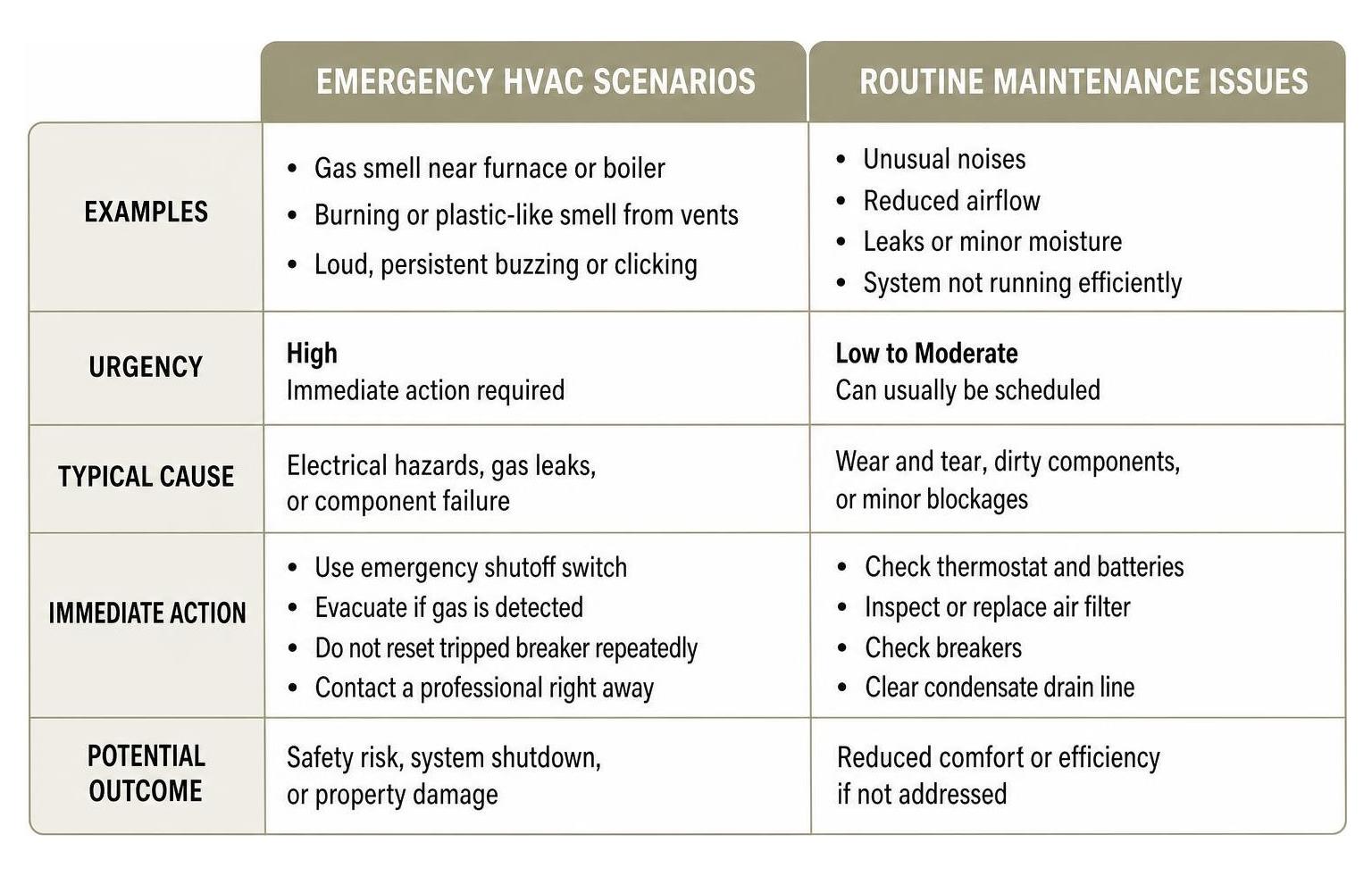
Understanding the difference between maintenance and emergencies helps you manage your budget and your comfort. Routine maintenance, such as seasonal tune-ups, is designed to identify wear and tear before it becomes a failure. In contrast, emergency repairs are reactive and often occur during the most stressful times of the year.
Scenario Urgency Typical Cause Unusual Noises Moderate Loose parts, debris in fan Inconsistent Heating Moderate Dirty filters, thermostat issues Total System Failure High Motor burnout, electrical fault Gas or Burning Odor Immediate Safety threat, electrical fire risk
Frequently Asked Questions About Emergency HVAC Repairs
What constitutes an HVAC emergency during extreme weather?
An emergency is defined as any situation where the system’s failure poses a risk to health or property. This includes total loss of heat in freezing weather, total loss of cooling during extreme heatwaves for vulnerable occupants, or any situation involving gas odors or electrical fire risks.
Can a clogged high-efficiency air filter cause system shutdown?
Yes. If a MERV 13 or higher filter becomes heavily loaded with dust, it acts like a wall. The system’s safety “limit switch” will often trigger a shutdown to prevent the blower motor from overheating and catching fire. This is a common reason for sudden system failure.
What should I do while waiting for an emergency HVAC technician?
First, ensure your safety. If you smell gas or burning, shut the system off at the breaker and leave the area. If it is a simple heating failure, keep interior doors closed to retain heat in the rooms you are using, and if necessary, use a portable space heater in a safe, monitored fashion until help arrives.
Conclusion
The pursuit of cleaner indoor air is a noble goal, and choosing the right MERV rating is a key part of that process. However, it is equally important to ensure that your HVAC system is capable of supporting your filtration choices. By balancing high-efficiency filtration with regular maintenance and a keen eye for the early warning signs of system failure, you can enjoy both healthy air and a reliable home climate.
When your system shows signs of distress that you cannot resolve with a simple filter change, do not hesitate to reach out for professional support. Proactive care is the best way to avoid the stress and cost of a total breakdown. Your comfort, safety, and peace of mind are worth the investment in professional, expert diagnostics.