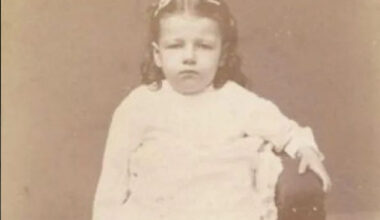
Ana May Wong, born Wong Liu Tsong on January 3, 1905, in Los Angeles, California, was a pioneering Chinese American actress whose career stretched across silent films, talking pictures, stage performances, vaudeville, radio, and television. I see her story as more than the biography of a movie star. It is the story of a woman who repeatedly walked through doors that were only partly open, then pushed them wider for those who followed.
She became internationally famous at a time when Hollywood offered Asian performers very few meaningful roles. Despite racism, stereotyping, and discriminatory casting practices, Wong built an extraordinary career and became widely regarded as the first Chinese American film star to achieve international recognition.
Ana May Wong at a Glance
| Basic Information | Details |
|---|---|
| Full birth name | Wong Liu Tsong |
| Professional name | Ana May Wong, commonly known as Anna May Wong |
| Born | January 3, 1905 |
| Birthplace | Los Angeles, California |
| Died | February 3, 1961 |
| Place of death | Santa Monica, California |
| Age at death | 56 |
| Heritage | Third generation Chinese American |
| Family roots | Taishan area, Guangdong, China |
| Occupation | Actress, performer, fashion icon |
| Career | Film, stage, vaudeville, radio, television |
| Film career | More than 60 films |
| Breakthrough | The Toll of the Sea, 1922 |
| Major international film | Piccadilly, 1929 |
| Television milestone | The Gallery of Madame Liu-Tsong, 1951 |
| Hollywood Walk of Fame | 1960 |
| Marital status | Never married |
| Children | None |
Growing Up in Los Angeles Chinatown
Wong was born into a large Chinese American family. Her parents, Wong Sam Sing and Lee Gon Toy, were second-generation Chinese Americans, and Wong was third.
Her family was from Taishan, Guangdong. Her grandfather came in the US around the mid-1850s, continuing a long tradition of Chinese immigration to California.
Dad Wong Sam Sing ran Sam Kee Laundry. Families lived and worked in Los Angeles Chinatown and neighboring communities, and children were expected to help. Wong saw the laundry as more than a family business. She witnessed the fast-growing film industry from her daily life.
Her interest in movies began instantly. She sometimes skipped school to view motion pictures in Los Angeles. On film sets, she was called the “Curious Chinese Child,” capturing her curiosity and determination.
She also grew up racist. After school bullying, her parents enrolled Wong and her sister in a Chinese Mission School. The young girl who loved the film grew up between a traditional Chinese American household and a Hollywood industry that loved Asian imagery but prejudged Asian actors.
From Extra to Hollywood Star
Wong began working as an extra in The Red Lantern in 1919 when she was only 14. Her ambitions quickly outgrew background roles.
In 1921, she left Los Angeles High School to pursue acting full-time. The decision was risky, but her determination was unmistakable.
Her breakthrough arrived with The Toll of the Sea in 1922. The film was among the earliest productions made using Technicolor, and Wong’s performance placed her firmly in the public eye. She soon became one of the most recognizable Asian American performers in Hollywood.
In 1924, she appeared in The Thief of Bagdad alongside Douglas Fairbanks. She also attempted to gain greater control over her career by establishing Anna May Wong Productions, although the venture was short-lived.
Yet success came with a painful contradiction. Hollywood wanted Wong’s appearance, exotic image, elegance, and screen presence, but it frequently denied her the opportunity to play fully developed characters.
Fighting Hollywood’s Stereotypes
Wong kept encountering restricted classifications. She played the seductive “Dragon Lady” and the sorrowful “Butterfly,” roles fashioned by Western illusions about Asian women rather than human complexity.
Anti-miscegenation laws added another hurdle. Many productions prohibited interracial romance with a white starring guy. Although beautiful and popular, Wong struggled to become a romantic heroine due to that restriction.
One of the most famous was 1937’s The Good Earth. Wong wanted to play O-Lan, the main female part, but Luise Rainer, a white actress in yellowface, played it.
Wong saw this as more than a squandered opportunity. It symbolized the bigger organization that informed her she was talented enough to draw audiences but not good enough to lead.
Finding Freedom in Europe
In March 1928, Wong left Hollywood for Europe. I think of this period as one of the most fascinating chapters of her career because the actress who had been constrained in America suddenly found an international stage.


She worked in Germany, Britain, France, and elsewhere, appearing in films and on stage. European audiences and critics frequently celebrated her beauty, sophistication, and acting ability.
Her German collaborations with director Richard Eichberg included Schmutziges Geld, Großstadtschmetterling, and Der Weg zur Schande. These films helped establish her as an international star.
Her greatest European triumph was arguably Piccadilly in 1929. Wong played Shosho, a scullery maid who becomes a sensational nightclub dancer. Her performance was magnetic. She did not merely participate in the film. She seemed to pull the camera toward her.
She also tackled the difficult transition from silent cinema to sound. The Flame of Love in 1930 was produced in English, German, and French versions, allowing Wong to demonstrate her linguistic ability and adaptability.
Her European career extended beyond cinema. She appeared on the London stage in The Circle of Chalk, worked in German-language theater, performed in Vienna in Tschun Tschi, and developed a stage show incorporating singing and dancing.
Europe gave Wong something Hollywood had repeatedly withheld: room to demonstrate the breadth of her talent.
A Cosmopolitan Fashion Icon
Wong was more than a movie star. She was a 1920s and 1930s fashion icon.
She seamlessly switched between Western and Chinese-inspired attire. Her public image included flapper silhouettes, exquisite clothes, elaborate hairstyles, and Chinese decorations.
In 1934, the Mayfair Mannequin Society named her “world’s best dressed woman.” The honor acknowledged Wong’s peculiar role in popular culture. The American-born Chinese woman was a style icon on both sides of the Atlantic.
Though polished, her image never lost its uniqueness. Her fashion sense was another way she controlled perception.
Returning to America and Expanding Her Career
Wong eventually returned to Hollywood, continuing to work in film despite the limitations she had already encountered.
Her filmography included more than 60 productions across the silent and sound eras. Among her notable later works was Daughter of Shanghai in 1937, in which she shared the screen with Philip Ahn. The film was significant because Asian American performers occupied the central roles rather than simply serving as exotic scenery around white stars.
She also appeared in Java Head in 1934, which included a rare interracial kiss involving Wong and white actor John Loder.
During her career, Wong also supported Chinese relief efforts and used her fame to draw attention to China during periods of crisis.
Her Historic Television Role
In 1951, Wong became the star of The Gallery of Madame Liu-Tsong. It was the first American television series to feature an Asian American lead.
The series was short-lived, but its importance was much larger than its duration suggests. Television was becoming a powerful part of American life, and Wong was once again entering a medium where Asian American faces were rarely placed at the center.
Her career had now crossed almost every major form of popular entertainment available to her generation.
Ana May Wong’s Parents
Wong’s parents remained important figures throughout her life, even though her decision to become an actress initially caused family tension.
Wong Sam Sing
Wong Sam Sing, also recorded as Sam-sing or Sang-Sim, was Wong’s father. Born around 1858 in California, he was a second-generation Chinese American and the owner of the family laundry.
He had previously been married in China and carried the responsibility of supporting a large household. Like many parents of the period, he initially regarded acting as an unsuitable career for his daughter.
Despite his reservations, the family bond endured. Wong remained deeply connected to her family and helped support relatives financially as her career developed.
Lee Gon Toy
Lee Gon Toy, also known as Lee Toy or Gon-toy, was Wong’s mother. She was born in the San Francisco area and was also a second-generation Chinese American.
Her death was devastating to Wong. Lee Gon Toy was struck by a car in front of the family home in 1930, although some accounts place her death in 1931.
Wong’s relationship with her mother illustrates the emotional cost behind the glamour of her career. International fame did not make family losses any easier.
The Wong Siblings
Wong was the second child in a large family. Records and accounts vary over whether the family consisted of seven or eight children, but her siblings played an important role in her personal life.
Lew Ying, Known as Lulu
Lew Ying, or Lulu, was Wong’s older sister, born around 1902. She was particularly close to Wong and accompanied her during parts of her European travels.
Their relationship was a reminder that Wong’s international adventures were not entirely solitary. Family members could serve as companions and sources of emotional support while she navigated unfamiliar countries.
James Norman Wong
James Norman Wong, sometimes simply identified as James, was born in 1907 and died in 1971. Like the other siblings, he belonged to a family whose daily life was closely connected to the laundry business and the challenges of being Chinese American in early twentieth-century California.
Mary Wong
Mary Wong was born around 1910 and died in 1940. She reportedly had some involvement with film work, although she never approached her sister’s level of public fame.
Mary was buried with her mother and Ana May, reflecting the family’s enduring connections even after Wong’s career had taken her around the world.
Frank Way Wong
Frank Way Wong, born in 1912, died in 1989. Wong’s success allowed her to help family members financially, and her relationship with her siblings remained an important part of her life.
Roger Sam Wong
Roger Sam Wong was born in 1915 and died in 1983. He was another member of the large Wong household that had grown around the family’s laundry business.
Marietta Wong
Marietta was a younger sister born around 1919. She died as an infant in 1920.
Her short life was one of the family’s early tragedies, occurring while Ana May was still a teenager.
Richard Wong
Richard Wong, born in 1922, was Ana May’s youngest brother and one of the people closest to her in her later years. He lived with her in Santa Monica and remained proud of his sister’s accomplishments.
When Wong died in 1961, Richard inherited much of her estate. Family collections and later estate sales helped preserve objects connected to her private life, including jewelry, clothing, and other personal possessions.
Ana May Wong’s Personal Life
Wong never married and had no children. Her decision appears to have been closely connected to her desire for independence and the realities of her career.
She had romantic relationships and was associated with several men, including Caucasian men, but she resisted the conventional expectations surrounding marriage. Acting itself was viewed negatively in some Chinese American communities, adding another layer of pressure.
There have also been stories linking Wong romantically with figures such as Marlene Dietrich, Marshall Neilan, cinematographer Charles Rosher, and writer Eric Maschwitz. Some of these stories have been exaggerated over time. Her friendship with Dietrich is well documented, but a famous photograph or close association should not automatically be interpreted as proof of a romantic relationship.
What stands out most clearly is Wong’s independence. She built a life around work, travel, family, performance, and personal freedom.
Real Estate, Wealth, and Her Estate
Wong was more financially sophisticated than her glamorous public image might suggest. She invested in real estate, including the Moongate Apartments in Santa Monica, and owned property connected to her life in California and London.
Estimates of her wealth at death vary widely, with figures commonly placed between approximately $1 million and $5 million in contextual estimates. One estimate places her estate at around $1.5 million.
Her will reflected her family priorities. She left jewelry, furs, and $5,000 to a sister, while much of the remaining estate went to her brother Richard. She had already helped other family members during her lifetime, so her estate was only part of the financial support she provided.
Her Final Years and Death
Wong continued working into the 1950s and remained active in entertainment. Her final years were marked by health difficulties, but she continued to pursue professional opportunities.
She received a star on the Hollywood Walk of Fame in 1960, an honor that arrived near the end of a career spanning more than four decades.
Wong died on February 3, 1961, in Santa Monica, California, exactly one month after her 56th birthday. Her death was associated with a heart attack, with cirrhosis complications also noted in accounts of her health.
She had been planning to appear in Flower Drum Song when she died.
A Legacy That Grew After Her Death
For decades after Wong’s death, her importance was recognized by specialists and devoted admirers but was not always reflected in mainstream American culture.
That changed dramatically in the twenty-first century.
Her films were restored and rediscovered. Exhibitions and biographies brought new attention to her European years, fashion, family, and struggles with Hollywood. Writers began examining not only the discrimination she faced but also the choices she made to overcome it.
In 2022, Wong became the first Asian American featured on United States currency when her image appeared on the American Women Quarters program. The honor transformed an actress once confined by stereotypes into a symbol of American cultural history.
Her story continues to resonate because Wong did not simply wait for Hollywood to change. She traveled when opportunities disappeared. She learned languages. She performed on stage. She crossed borders. She experimented with television. She built financial independence and supported her family.
The screen may have been her original destination, but her life became much larger than Hollywood.
FAQ
Who was Ana May Wong?
Ana May Wong, born Wong Liu Tsong on January 3, 1905, was a Chinese American actress and international film star. She worked in Hollywood, Europe, theater, vaudeville, radio, and television and is widely regarded as the first Chinese American film star to achieve international recognition.
What was Ana May Wong’s real name?
Her birth name was Wong Liu Tsong. She became professionally known as Anna May Wong, although the name Ana May Wong is also used in some references.
When did Ana May Wong begin acting?
She began working as a film extra in The Red Lantern in 1919 at age 14. Her breakthrough came three years later in The Toll of the Sea.
Why did Ana May Wong leave Hollywood for Europe?
Wong became frustrated with stereotypical roles, racial discrimination, anti-miscegenation restrictions, and the industry’s refusal to give Asian American performers many major romantic or dramatic roles. Europe offered her more varied opportunities and allowed her to establish herself as an international star.
What was Ana May Wong’s most famous European film?
Piccadilly, released in 1929, is generally considered one of the defining films of her European career. Her performance as Shosho became a major showcase for her dramatic ability, beauty, and screen presence.
Did Ana May Wong speak other languages?
Yes. Her European career involved performances in German and French as well as English. The Flame of Love was produced in English, German, and French versions.
Did Ana May Wong marry?
No. She never married and had no children. She maintained her independence while pursuing a demanding international career.
How many siblings did Ana May Wong have?
Wong was the second child in a large family. Her known siblings included Lew Ying, James Norman, Mary, Frank Way, Roger Sam, Richard, and infant sister Marietta. Historical records vary regarding the exact number of children in the family.
Who inherited much of Ana May Wong’s estate?
Her younger brother Richard Wong inherited much of the estate. He had been particularly close to Wong during her later years and lived with her in Santa Monica.
What happened to Ana May Wong’s mother?
Lee Gon Toy died after being struck by a car in front of the family home around 1930 or 1931. Wong was deeply affected by her mother’s death.
What was Ana May Wong’s television achievement?
In 1951, Wong starred in The Gallery of Madame Liu-Tsong, the first American television series with an Asian American lead.
When did Ana May Wong receive her Hollywood Walk of Fame star?
She received her Hollywood Walk of Fame star in 1960, one year before her death.
Why is Ana May Wong important today?
Wong challenged the racial limitations of early Hollywood and became an internationally recognized performer despite systemic discrimination. Her career helped expand the possibilities for Asian American representation, while her later recognition has made her an important figure in American film, television, fashion, and cultural history.