Instilling healthy habits during early childhood is one of the most impactful investments parents and caregivers can make in a child’s lifelong well-being. During the formative early years, young minds and bodies absorb behaviors, routines, and attitudes rapidly from their immediate environments. By establishing consistent physical routines, promoting balanced nutrition, encouraging regular movement, prioritizing restful sleep, and modeling positive emotional responses, you create a supportive framework that helps children thrive physically, mentally, and socially.
Establish Consistent Daily Routines and Rhythms
Young children thrive when their daily lives follow predictable, reassuring schedules. Establishing structured rhythms for waking up, eating meals, playing, and going to bed provides toddlers with a comforting sense of emotional security, reducing anxiety and behavioral friction throughout the day.
Design a visual daily routine chart using simple pictures that illustrate key daily transitions, such as brushing teeth, washing hands, eating lunch, and tidying up toys. Reviewing the visual schedule together helps children anticipate what comes next, fostering self-regulation and encouraging independent participation in daily tasks.
While maintaining consistency is vital, build flexible buffers into your routine to accommodate spontaneous play or unexpected disruptions without stress. A balanced, predictable daily schedule lays the foundation for healthy time management and self-care habits as children grow.
Model Balanced Nutrition and Mindful Eating Habits
The dietary preferences and attitudes toward food that children develop during early childhood often persist into adulthood. Introducing a wide variety of nutrient-dense foods early encourages adventurous eating habits and supports optimal physical and cognitive development.
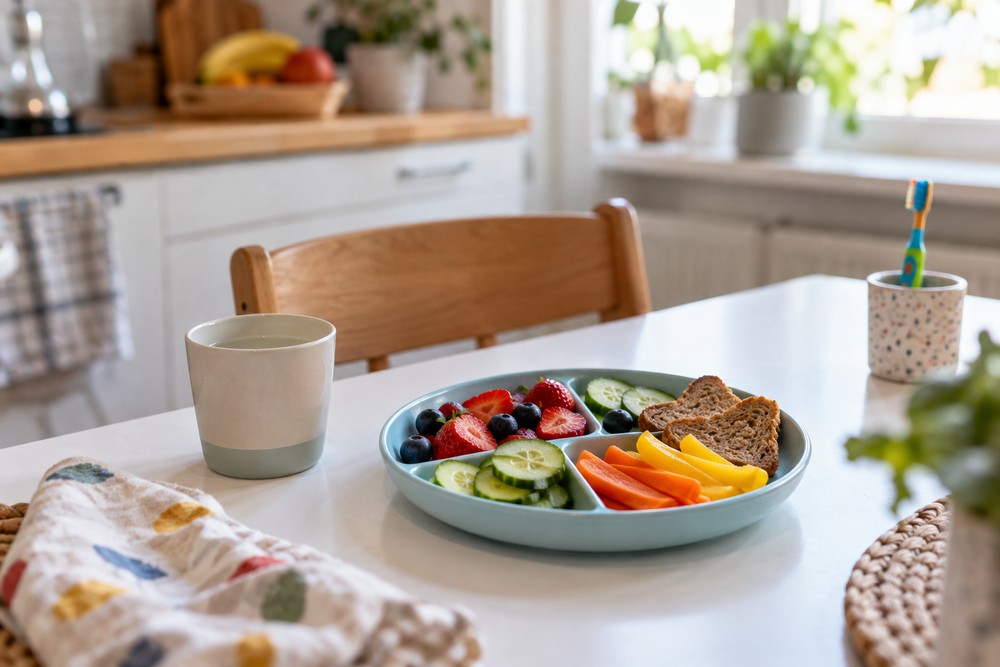
Offer colorful plates featuring whole grains, lean proteins, fresh fruits, and vibrant vegetables during family meals and snack times. Avoid using sugary treats as rewards for good behavior or forcing children to clean their plates when full, as these practices can disrupt a child’s natural internal hunger cues and foster unhealthy emotional relationships with food.
Involve young children in age-appropriate meal preparation tasks, such as washing produce, tearing lettuce for salads, or stirring batter. Engaging children in kitchen activities sparks curiosity about healthy ingredients and makes them far more eager to try new, nutritious foods at the dining table.
Encouraging Family Meals and Positive Table Dynamics
Gathering around the dining table for shared family meals fosters open conversation, strengthens emotional bonds, and encourages polite manners.
Turning off digital screens during mealtime encourages mindful eating and focused family connection. Positive mealtime dynamics build healthy lifelong eating habits.
Presenting New Foods Without Pressure
Serving small, non-intimidating portions of unfamiliar vegetables alongside favorite foods encourages toddlers to explore new flavors at their own pace.
Repeated, pressure-free exposure builds food familiarity and reduces picky eating tendencies over time. Patient food introduction supports diverse nutritional habits.
Encourage Daily Physical Activity and Outdoor Play
Regular physical movement is essential for developing strong bones, healthy muscles, gross motor coordination, and cardiovascular endurance in growing children. Active play also serves as a natural outlet for excess physical energy, improving daytime mood and nighttime sleep quality.
Provide daily opportunities for unstructured outdoor play where children can run, jump, climb, ride tricycles, and explore nature freely. Outdoor environments stimulate sensory development, spatial awareness, and creative problem-solving as children navigate physical playground structures and natural terrain.
Incorporate fun indoor movement activities during inclement weather, such as family dance sessions, simple hallway obstacle courses, or animal movement games. Making physical movement an enjoyable, regular part of daily life instills a lifelong appreciation for active living.
Building Motor Skills Through Playground Exploration
Navigating climbing ladders, balance beams, and slides builds core physical strength, spatial coordination, and confidence naturally.
Outdoor play allows children to test their physical boundaries safely under supportive adult supervision. Playground exploration supports healthy motor skill growth.
Creating Active Indoor Movement Games
Setting up soft pillow obstacle courses or playing freeze-dance indoors keeps children physically engaged during rainy or cold afternoons.
Creative indoor movement games release physical energy and support gross motor control year-round. Active indoor play promotes continuous physical health.
Prioritize Restful Sleep and Calm Bedtime Rituals
Adequate, high-quality sleep is crucial for a young child’s physical growth, immune system strength, brain development, and daytime emotional regulation. Chronic sleep deprivation in toddlers often manifests as hyperactivity, mood swings, difficulty focusing, and frequent behavioral meltdowns.
Establish a consistent, calming evening bedtime routine that signals to your child’s body that it is time to wind down and rest. Activities such as taking a warm bath, dimming household lights, brushing teeth, and reading storybooks together create a peaceful transition from an active day to a restful night.
Maintain a quiet, comfortable sleep environment by keeping bedrooms cool, dark, and free from digital media screens. Sticking to consistent sleep and wake schedules—even on weekends—ensures children receive the recommended nine to twelve hours of restorative sleep nightly.
Establishing Unwind Routines Before Bed
Transitioning from active play to quiet activities like reading stories or listening to soft lullabies lowers heart rates and prepares bodies for sleep.
Consistent unwind rituals reduce bedtime resistance and promote faster sleep onset naturally. Calming evening routines ensure peaceful bedtime transitions.
Eliminating Evening Digital Screen Exposure
Turning off televisions, tablets, and smartphones at least one hour before bedtime prevents blue light from disrupting natural melatonin production.
Keeping bedrooms screen-free creates an optimal environment for uninterrupted, high-quality sleep. Screen-free bedrooms protect healthy sleep quality.
Partner with Quality Caregivers and Educational Programs
Developing healthy habits extends beyond the home environment into the childcare and early education settings where young children spend significant portions of their day. Collaborating with professional educators ensures that healthy physical, social, and emotional routines are reinforced consistently across all environments.
Selecting a reputable program, such as a high-quality daycare in Albuquerque, provides children with structured daily schedules, nutritious snacks, supervised outdoor play, and guided peer interactions. Professional early childhood educators model healthy hygiene habits, such as thorough handwashing before meals and after outdoor play, reinforcing key wellness practices daily.
Maintain open, regular communication with your child’s teachers and caregivers to align home routines with classroom expectations. A collaborative partnership between families and educators creates a seamless, supportive learning environment that solidifies healthy habits in every aspect of a child’s life.
Reinforcing Hygiene Habits Through Group Routines
Practicing proper handwashing, tissue use, and dental hygiene in group settings turns basic self-care into a fun, shared daily activity.
Peer modeling in early education classrooms encourages hesitant toddlers to adopt personal hygiene routines willingly. Group care reinforces essential health habits.
Aligning Home and Classroom Schedules
Coordinating nap times, meal schedules, and behavioral expectations with early childhood teachers creates reassuring consistency for young children.
Consistent expectations across home and school environments reduce toddler confusion and promote smooth emotional transitions. Shared schedules support stable habit formation.
Nurture Emotional Literacy and Positive Hygiene Habits
Developing healthy habits involves caring for a child’s emotional well-being and personal hygiene just as much as their physical nutrition and exercise. Teaching young children how to identify emotions, practice self-care, and manage stress builds emotional resilience and personal responsibility.
Help children build emotional literacy by labeling feelings during challenging moments, validating their experiences, and teaching simple calming strategies like deep breathing. Encouraging children to express their feelings verbally reduces emotional frustration and builds healthy interpersonal communication skills.
Incorporate personal hygiene habits naturally into daily routines, making activities like brushing teeth twice daily, washing hands thoroughly with soap, and taking baths enjoyable through songs and playful games. Empowering children to take pride in personal hygiene fosters lifelong self-care and health awareness.
Teaching Deep Breathing for Emotional Regulation
Guiding children to take slow, deep “belly breaths” when feeling overwhelmed helps them calm their nervous systems and regain self-control.
Practicing simple calming techniques during peaceful moments ensures children can access emotional coping tools during stressful situations. Mindful breathing nurtures emotional resilience.
Making Personal Hygiene Fun and Engaging
Using colorful toothbrushes, singing two-minute handwashing songs, and playing with bath toys transforms daily hygiene chores into fun activities.
Engaging hygiene routines encourage toddlers to take pride in keeping their bodies clean and healthy independently. Playful self-care builds lasting hygiene habits.
Conclusion
Developing healthy habits in young children is a gradual, rewarding journey built upon consistent routines, balanced nutrition, active play, restorative sleep, professional partnerships, and loving guidance. By creating structured daily schedules, modeling healthy behaviors, encouraging outdoor movement, prioritizing sleep, collaborating with quality caregivers, and nurturing emotional literacy, you equip your child with essential life skills. Building a strong wellness foundation during these formative early years empowers your child to grow into a confident, resilient, and healthy individual prepared for lifelong success.