Choosing a fence for a Maryland property involves more than selecting a color or panel style. A fence may need to create a private backyard retreat, define a front lawn, contain an energetic dog, protect a garden, or improve access around a pool or shed. Homeowners considering vinyl fencing in Maryland should begin by deciding which of those needs matters most. Maryland yards can face changing seasons, moisture, strong sun, wind, mature trees, slopes, and close neighboring homes. The best fence is one that works with those conditions while fitting the home’s appearance, the household’s maintenance habits, and the way people actually use the outdoor space.
Start With the Fence’s Main Purpose
Rank the top two or three goals before comparing materials. Common priorities include backyard privacy, pet containment, child safety, pool protection, property definition, security, curb appeal, and protection for gardens or equipment. A fence that looks attractive from the street may not be the best choice for a large dog that jumps, digs, or reacts to activity beyond the property line. For example, a family with a dog may place secure gates, limited bottom gaps, and narrow openings ahead of decorative detail. A homeowner creating an outdoor dining area may instead prioritize solid screening near a patio while leaving other parts of the yard more open.
Compare Common Fence Materials
Every material has useful trade-offs. This comparison can help narrow the field before choosing a specific style.
| Material | Common Strengths | Privacy | Upkeep Considerations |
| Wood | Natural look, flexible designs, repairable boards | High with solid panels | May need cleaning, staining, sealing, or painting |
| Vinyl | Clean appearance, solid privacy options | High with solid panels | Usually does not need painting or staining |
| Aluminum | Open views, refined appearance, decorative boundaries | Low | Low routine upkeep, but inspect hardware and finish |
| Chain Link | Practical for pet runs, large areas, and utility spaces | Low without screening | Check mesh, posts, tension, and gate hardware |
| Composite | Modern appearance and privacy-focused designs | High with solid panels | Compare product-specific cleaning and repair needs |
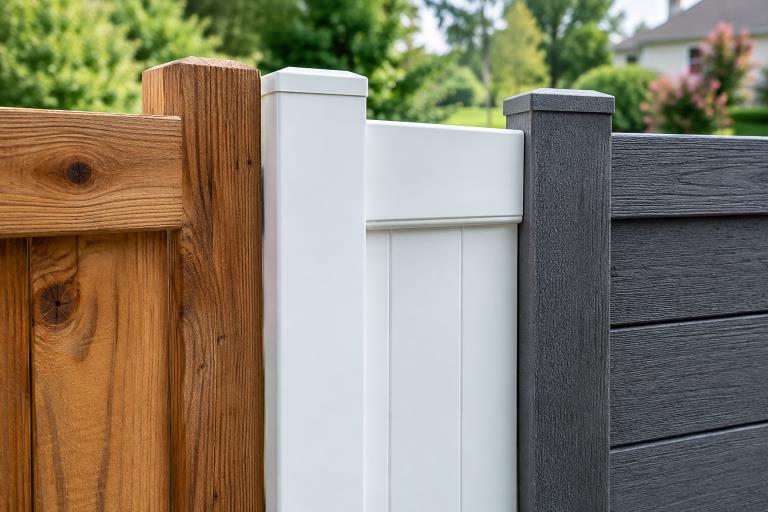
Wood remains a versatile choice for privacy layouts, picket fences, and custom designs, while vinyl offers a uniform appearance with less finish-related upkeep. Aluminum and ornamental metal work well where visibility matters, such as front yards or around landscaped spaces, but their open design provides limited screening. Chain link can be useful for side-yard dog runs and large enclosures, especially when softened with landscaping or privacy slats. Composite fencing can suit contemporary homes, but samples should be viewed outdoors because color and texture can look different in direct sun and shade.
Choose the Right Privacy Level
Privacy does not need to be all or nothing. Solid panels offer the strongest screening, while lattice, shadowbox, spaced-board, and picket styles allow more light and airflow. Consider full privacy near patios, hot tubs, seating areas, bedroom windows, or locations facing a busy sidewalk. In other areas, partial privacy may make the yard feel less enclosed. Layering a fence with shrubs, trees, trellises, or planting beds can soften a tall boundary and improve screening over time. A practical material comparison guide can also help homeowners weigh privacy, curb appeal, maintenance, and mixed-layout options before settling on one design.
Plan for Pets and Children
For households with pets or young children, small construction details matter as much as the fence material. Review fence height, picket or mesh spacing, bottom clearance, exposed hardware, gate swing direction, and latch placement. Dogs that dig may need attention at the base of the fence, while climbers may need a design without convenient footholds. A solid fence can reduce visual stimulation for some dogs, while open fencing can preserve views for households that prefer a less enclosed yard. Pool barriers deserve especially careful planning, because requirements can vary by jurisdiction and may address gate operation, latch placement, openings, and fence height. Review a fence planning checklist before finalizing gates, pet-safety details, and preparation for installation.
Match the Fence to the Home and Yard
A fence should support the home rather than compete with it. Open, lower-profile designs often suit visible front yards, while taller solid fencing is often better placed behind the home. Consider the fence from several viewpoints, including the street, driveway, kitchen, patio, neighboring homes, and any frequently used windows. Color, post caps, rail spacing, gate design, and fence proportions all affect curb appeal. A simple fence color can complement brick, stone, siding, or landscaping without overpowering the property. Viewing samples outdoors is worthwhile because tree shade and changing daylight can alter how finishes appear.
Think About Maintenance and Weather
Installation cost is only part of the decision. Wood may require periodic finish care, while vinyl, aluminum, and some composite systems generally reduce routine painting or staining. Regardless of material, inspect gates, hinges, latches, posts, and damaged sections over time. Think realistically about rain, snow, irrigation overspray, sunlight, insects, wind, lawn equipment, and nearby planting beds. A material that requires more upkeep can still be a good choice when its appearance and repairability suit the property. The important question is whether the maintenance fits the owner’s time and expectations.
Use Different Fence Styles in Different Areas
One design does not have to surround the entire property. A Maryland home may use an open ornamental style in the front yard, a taller privacy fence behind the house, and a practical chain-link enclosure for a side-yard dog run. This approach can balance curb appeal, privacy, visibility, airflow, and function. Mixed layouts look more intentional when colors, post styles, gate hardware, and transitions feel connected. Plan where each style begins and ends so the finished fence appears coordinated rather than pieced together.
Check Property Rules Before Building
- Confirm property lines with a recent survey when possible.
- Review local permit requirements and HOA restrictions.
- Check rules affecting corners, sidewalks, driveways, pools, and shared boundaries.
- Identify easements, drainage routes, and access needs.
- Arrange for underground utilities to be marked before digging.
Rules can differ among Maryland counties, cities, neighborhoods, and property types. Even an attractive, well-built fence can create avoidable problems if it crosses a boundary, interferes with required sightlines, or blocks access to an easement.
Create a Simple Fence Planning Worksheet
- Walk the yard and note slopes, trees, drainage, patios, sheds, and existing gates.
- Write down the top priorities for privacy, pets, safety, appearance, or security.
- Mark where full privacy is needed and where open fencing is acceptable.
- Measure fence lines and gate openings.
- Compare written estimates for materials, labor, removal, cleanup, gates, and warranty terms.
Common Questions About Choosing a Fence
What is the best fence for privacy?
Solid wood, vinyl, and composite designs are common privacy choices. The right option depends on appearance, upkeep, budget, climate exposure, and yard layout.
What is the best fence for dogs?
The best dog fence depends on the animal’s size, jumping ability, digging habits, and tendency to squeeze through openings. Secure gates, appropriate height, spacing, and bottom clearance are essential considerations.
Should the same fence be used around the whole property?
Not necessarily. A more open front-yard fence, a private backyard enclosure, and a functional side-yard section can be a better fit than a single uniform style.
Conclusion
The right Maryland fence should fit daily life and the property’s appearance, providing a practical balance of privacy, security, accessibility, and visual appeal. Before choosing a design, consider the main purpose of the fence, the amount of maintenance you are willing to handle, and how the outdoor space will be used throughout the year. Compare materials such as wood, vinyl, aluminum, and chain-link based on their durability, appearance, maintenance requirements, and suitability for the property. It is also important to plan gate placement, convenient entry points, pet safety, and visibility around driveways or walkways. Before construction begins, check applicable local zoning rules, property boundaries, height restrictions, permit requirements, and any neighborhood or homeowners association guidelines. Careful planning can help prevent avoidable changes and unexpected expenses. When privacy, maintenance, safety, curb appeal, and access are all considered, the finished fence can serve the household’s needs while remaining attractive and functional for years to come.