Understanding St. Petersburg Car Crash Statistics and Legal Realities
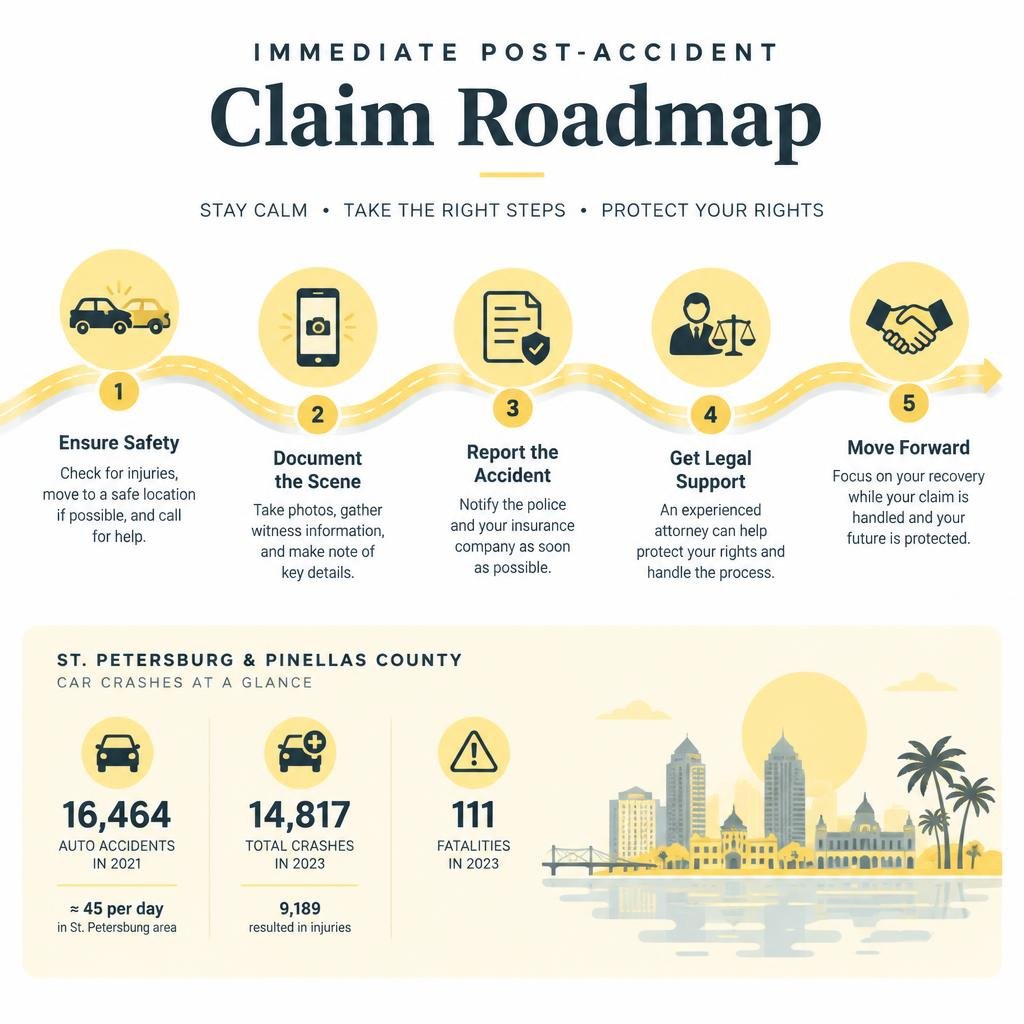
St. Petersburg, a vibrant city within Pinellas County, unfortunately, experiences its share of traffic incidents. Understanding the prevalence and impact of these accidents is crucial for residents and visitors alike. According to data from the Florida Department of Highway Safety and Motor Vehicles (FLHSMV), Pinellas County saw a significant number of auto accidents. In 2021, for instance, a staggering 16,464 auto accidents were reported across Pinellas County, averaging about 45 crashes daily in St. Petersburg and its surrounding areas. This figure highlights the persistent risk drivers face on local roads.
Looking at more recent data, 2023 recorded 14,817 total crashes in Pinellas County and the St. Petersburg area. While this shows a slight decrease from 2021, the impact remains substantial. A concerning 9,189 of these crashes in 2023 resulted in injuries, underscoring the potential for harm in even seemingly minor collisions. Tragically, 2023 also saw 111 fatalities from car accidents in St. Petersburg, emphasizing the severe consequences that can arise from traffic incidents.
Beyond standard vehicle-to-vehicle collisions, St. Petersburg’s diverse transportation landscape also contributes to other types of accidents. In 2021, Pinellas County reported 546 bicycle accidents, 433 motorcycle accidents, and 499 pedestrian accidents. These statistics reveal the particular vulnerabilities of non-motorized road users and motorcyclists, who often sustain severe injuries due to the lack of protective barriers.
The financial repercussions of car accidents are also significant. The comprehensive cost of a car accident can vary dramatically based on the severity of injuries. In 2020, the average comprehensive cost ranged from $52,700 for less severe incidents to over $1.252 million for cases involving extensive injuries. Fatal car accidents carry an even higher economic burden, with an average valuation exceeding $11.4 million in 2020. These figures encompass not only medical bills and property damage but also lost wages, long-term care, and pain and suffering, illustrating the profound financial impact on victims and their families. Common causes of these accidents often include distracted driving, speeding, impaired driving, aggressive driving, and failure to yield, all of which contribute to the high number of incidents in our community.
Navigating Florida Accident Laws and Fault Regulations
Understanding Florida’s specific legal framework for car accidents is paramount for anyone involved in a collision in St. Petersburg. The state’s unique approach to fault and insurance can significantly impact your ability to recover compensation.
Modified Comparative Fault in Florida Crashes
Florida operates under a modified comparative fault system, which dictates how damages are awarded when multiple parties share responsibility for an accident. This means that if you are found partially at fault for an accident, your recoverable compensation will be reduced by your percentage of fault. For example, if a jury determines your total damages are $100,000, but you were 20% responsible for the accident, you would only be able to recover $80,000.
However, there’s a critical threshold: if you are found to be more than 50% at fault, you are barred from recovering any damages from the other party. This “51% bar” is a significant aspect of Florida law that can dramatically affect your claim. Insurance companies often attempt to shift blame to the injured party to reduce their payout or deny the claim altogether. This makes liability determination a complex and often contentious part of a car accident case, where skilled legal representation can be invaluable in defending against unfair accusations of fault and maximizing your potential recovery.
Florida No-Fault Insurance Rules and Filing Timelines
Florida is a “no-fault” state when it comes to car insurance. This system primarily requires drivers to carry Personal Injury Protection (PIP) coverage, which pays for a portion of your medical expenses and lost wages regardless of who was at fault for the accident. Your PIP policy will typically cover 80% of your reasonable and necessary medical expenses and 60% of lost wages, up to a maximum of $10,000.
For your PIP benefits to be fully available, it is crucial to seek medical treatment within 14 days of the accident. Failure to do so could significantly limit your ability to recover compensation for medical costs under your PIP policy. While PIP covers initial expenses, it often falls short for serious injuries. If your injuries meet a certain “serious injury threshold” (which includes significant and permanent loss of an important bodily function, permanent injury within a reasonable degree of medical probability, significant and permanent scarring or disfigurement, or death), you may be able to step outside the no-fault system and pursue a claim against the at-fault driver for additional damages, including pain and suffering.
Beyond insurance rules, strict deadlines govern when you can file a lawsuit. In Florida, personal injury claims related to car accidents must generally be filed within four years of the date of the accident. This is known as the statute of limitations. For wrongful death claims stemming from a car accident, the deadline is shorter, with only two years to file a complaint. Furthermore, if a government institution or public entity is involved in an accident, there are specific notice requirements and typically three years to issue a complaint, though this can vary and requires immediate action. Missing these deadlines can result in the permanent loss of your right to seek compensation, making timely legal consultation essential.
Why Choose Board-Certified St. Petersburg Auto Accident Attorneys
When facing the aftermath of a car accident, the choice of legal representation can profoundly impact the outcome of your case. While many attorneys practice personal injury law, selecting a Board-Certified St. Petersburg auto accident attorney offers a distinct advantage, particularly in complex cases.
Qualifications of Board-Certified St. Petersburg Auto Accident Attorneys
Board certification is the highest level of evaluation by The Florida Bar for attorneys. It signifies that a lawyer has met rigorous standards of excellence and professionalism in a specific area of law. For auto accident attorneys, this typically means certification in Civil Trial Law. To achieve this distinction, an attorney must demonstrate substantial involvement in civil trial law, pass an intensive peer review process, complete extensive continuing legal education, and pass a comprehensive examination.
This certification indicates not just experience, but a proven commitment to trial practice and a deep understanding of the intricacies of courtroom procedures, evidence, and legal strategy. It assures clients that their attorney possesses a high level of expertise in their field, is recognized by their peers for professionalism and ethics, and is prepared to take a case to trial if a fair settlement cannot be reached. When you are looking for dedicated and highly qualified legal assistance, choosing Board-Certified St. Petersburg auto accident attorneys can be a critical step toward securing the justice and compensation you deserve. These attorneys have demonstrated a superior level of knowledge and skill in handling complex personal injury litigation.
Evaluating Board-Certified St. Petersburg Auto Accident Attorneys for Your Claim
When considering legal representation, understanding the differences between a Board-Certified Civil Trial Specialist and a general personal injury practitioner can be crucial.
| Feature | Board-Certified Civil Trial Specialist | General Personal Injury Practitioner |
|---|---|---|
| Expertise Level | Highest level of recognition by The Florida Bar in a specific field. | Practices personal injury, but without specialized certification. |
| Trial Experience | Proven, substantial experience in courtroom trials. | May have limited or no actual trial experience. |
| Peer Review | Subjected to rigorous peer review for ethics and professionalism. | Not subject to the same formal peer review for specialization. |
| Knowledge Depth | Demonstrated advanced knowledge through comprehensive examination. | Knowledge base varies; may specialize without formal certification. |
| Case Handling | Often preferred for complex cases requiring litigation. | Suitable for straightforward cases, may settle more readily. |
| Negotiation Stance | Stronger leverage in negotiations due to trial readiness. | May be more inclined to settle to avoid trial. |
Most personal injury attorneys, including those who are Board-Certified, work on a contingency fee basis. This means you do not pay any upfront legal fees. Instead, the attorney’s fees are a percentage of the compensation they recover for you, whether through a settlement or a court award. If they don’t win your case, you generally don’t owe them attorney fees. However, clients are typically responsible for case expenses (such as filing fees, expert witness costs, and deposition costs), which are usually reimbursed from the settlement or award. This fee structure allows accident victims to pursue justice without immediate financial burden.
A Board-Certified attorney’s readiness for trial often provides a significant advantage during negotiations with insurance companies. Insurers are more likely to offer a fair settlement when they know the opposing counsel is fully prepared and capable of presenting a compelling case in court. This expertise can help ensure that your claim is valued appropriately and that you receive the maximum possible compensation for your injuries and losses.
Critical Post-Accident Steps and Recoverable Damages
The moments immediately following a car accident in St. Petersburg are critical. Your actions can significantly impact your safety, health, and the strength of any future legal claim.
Essential Actions After a Pinellas County Crash
- Ensure Safety and Check for Injuries: First and foremost, check yourself and any passengers for injuries. If possible and safe, move your vehicle to the side of the road to prevent further collisions.
- Call 911: Report the accident to the police, even if it seems minor. A police report provides an official record of the incident, which is invaluable for insurance claims and legal proceedings. Also, request paramedics if anyone is injured.
- Exchange Information: Obtain contact and insurance information from all involved parties, including names, phone numbers, addresses, insurance company names, policy numbers, and vehicle license plate numbers.
- Document the Scene: If you are able, use your phone to take photos and videos of the accident scene. Capture vehicle damage, road conditions, traffic signs, skid marks, debris, and any visible injuries. Speak to witnesses and get their contact information.

- Seek Medical Attention Immediately: Even if you feel fine, it’s crucial to be examined by a medical professional as soon as possible. Some injuries, like whiplash or internal bleeding, may not manifest symptoms for hours or days. Remember Florida’s 14-day rule for PIP benefits.
- Notify Your Insurance Company: Report the accident to your own insurance company promptly. Provide them with the basic facts, but avoid giving recorded statements or admitting fault without first consulting an attorney.
- Preserve Evidence: Keep all documents related to the accident, including police reports, medical records, repair estimates, and receipts for any accident-related expenses.
If you are involved in a hit-and-run accident in St. Petersburg, the steps are similar but with added urgency. Immediately call 911 and provide as much detail as possible about the fleeing vehicle and driver. Note down any distinguishing features, license plate numbers (even partial), make, model, and color of the vehicle. Your uninsured motorist (UM) coverage, if you have it, will be crucial in these situations, as it can cover your medical expenses and other damages when the at-fault driver cannot be identified.
Types of Compensation Available for Injury Victims
After a car accident in St. Petersburg, victims may be entitled to various forms of compensation to cover their losses. These damages are generally categorized as economic and non-economic.

Economic Damages are quantifiable financial losses directly resulting from the accident. These can include:
- Medical Expenses: This covers all past and future medical costs, including emergency room visits, hospital stays, doctor appointments, surgeries, prescription medications, physical therapy, rehabilitation, and long-term care. Common injuries sustained in St. Petersburg car accidents range from soft tissue injuries (like whiplash, sprains, strains), fractures, concussions, and traumatic brain injuries, to spinal cord injuries and internal organ damage, all of which incur significant medical costs.
- Lost Wages: Compensation for income you’ve lost due to being unable to work after the accident, as well as potential future lost earning capacity if your injuries prevent you from returning to your previous job or working at all.
- Property Damage: Costs to repair or replace your damaged vehicle and any other personal property destroyed in the accident.
- Out-of-Pocket Expenses: This includes costs like transportation to medical appointments, rental car fees, assistive devices, and household services you can no longer perform.
Non-Economic Damages are subjective, non-monetary losses that impact your quality of life. These are often more challenging to quantify but are a significant component of a personal injury claim. They can include:
- Pain and Suffering: Compensation for the physical pain and emotional distress caused by your injuries.
- Emotional Anguish: This covers psychological impacts such as anxiety, depression, PTSD, and fear.
- Loss of Enjoyment of Life: Damages for the inability to participate in activities and hobbies you once enjoyed due to your injuries.
- Disfigurement and Impairment: Compensation for permanent scarring, loss of bodily function, or other lasting physical changes.
In some rare cases involving extreme recklessness or intentional misconduct, punitive damages may also be awarded. These are not intended to compensate the victim but rather to punish the at-fault party and deter similar behavior in the future. A skilled attorney can help you identify all potential damages and build a strong case to recover the full compensation you deserve.
Frequently Asked Questions About St. Petersburg Car Accident Claims
Navigating the aftermath of a car accident often brings a host of questions regarding legal processes, costs, and eligibility for compensation. Here, we address some of the most common inquiries we receive.
What is the deadline for filing an auto accident lawsuit in Florida?
The deadline for filing an auto accident lawsuit in Florida is known as the statute of limitations. For most personal injury claims arising from a car accident, you have four years from the date of the accident to file a lawsuit. However, this period is significantly shorter for wrongful death claims, which must be filed within two years of the date of death. If the accident involves a government entity, there are specific notice requirements and often a three-year window to file a complaint, though these cases can be particularly complex and require immediate legal attention. It is crucial not to delay seeking legal advice, as missing these deadlines can permanently bar you from recovering compensation.
How do legal fees work for auto accident lawyers?
The vast majority of St. Petersburg auto accident attorneys work on a contingency fee basis. This means that you, as the client, do not pay any upfront legal fees. Instead, the attorney’s fee is a percentage of the final settlement or court award they secure on your behalf. If the attorney does not win your case, you typically owe no attorney fees. This arrangement ensures that accident victims, regardless of their financial situation, can access high-quality legal representation. While attorney fees are contingent, clients are usually responsible for case expenses, such as court filing fees, expert witness fees, deposition costs, and investigative expenses. These expenses are typically advanced by the law firm and then reimbursed from the settlement or award at the conclusion of the case. The specific percentage and expense arrangements are outlined in a written agreement you sign at the beginning of your representation.
Can injured drivers recover damages if partially at fault?
Yes, under Florida’s modified comparative fault system, an injured driver can still recover damages even if they share some fault for the accident, provided their percentage of fault does not exceed 50%. If you are found to be partially responsible, your total recoverable damages will be reduced proportionally to your degree of fault. For example, if your damages are assessed at $100,000, but you are determined to be 25% at fault, you would be eligible to recover $75,000. However, if your fault is determined to be 51% or greater, you would be barred from recovering any damages from the other party. Insurance companies often try to assign a higher percentage of fault to the injured party to minimize their payout, making it essential to have an experienced attorney who can effectively argue against such claims and protect your right to compensation.
Conclusion
A car accident in St. Petersburg can disrupt your life in countless ways, leaving you with physical injuries, emotional trauma, and significant financial burdens. Understanding your rights and the legal landscape in Florida is the first step toward rebuilding your life. From navigating the complexities of no-fault insurance and modified comparative fault to adhering to strict statutes of limitations, the process can be daunting.
By taking immediate, decisive action after an accident, meticulously documenting the scene, seeking prompt medical attention, and understanding the full scope of potential damages—both economic and non-economic—you lay the groundwork for a successful claim. When faced with the challenge of dealing with insurance companies and potentially contentious legal battles, the value of experienced legal advocacy becomes clear.
Choosing a qualified St. Petersburg auto accident attorney, particularly one with Board Certification in civil trial law, can provide the expertise and peace of mind you need. These professionals are equipped to protect your claim, negotiate effectively on your behalf, and fight for the financial recovery you deserve. Don’t let the complexities of the legal system prevent you from seeking justice. Timely representation is key to ensuring your rights are protected and that you receive fair compensation for your injuries and losses.