Everyone assumes the newer process automatically beats the older one, and that assumption holds up more often than not. But not always. For a specific category of parts, an approach that’s been around for decades still turns out to be the smarter choice, and understanding why comes down to a few practical realities that don’t show up in a sales pitch.
Large and Thick Parts Play to Their Strengths
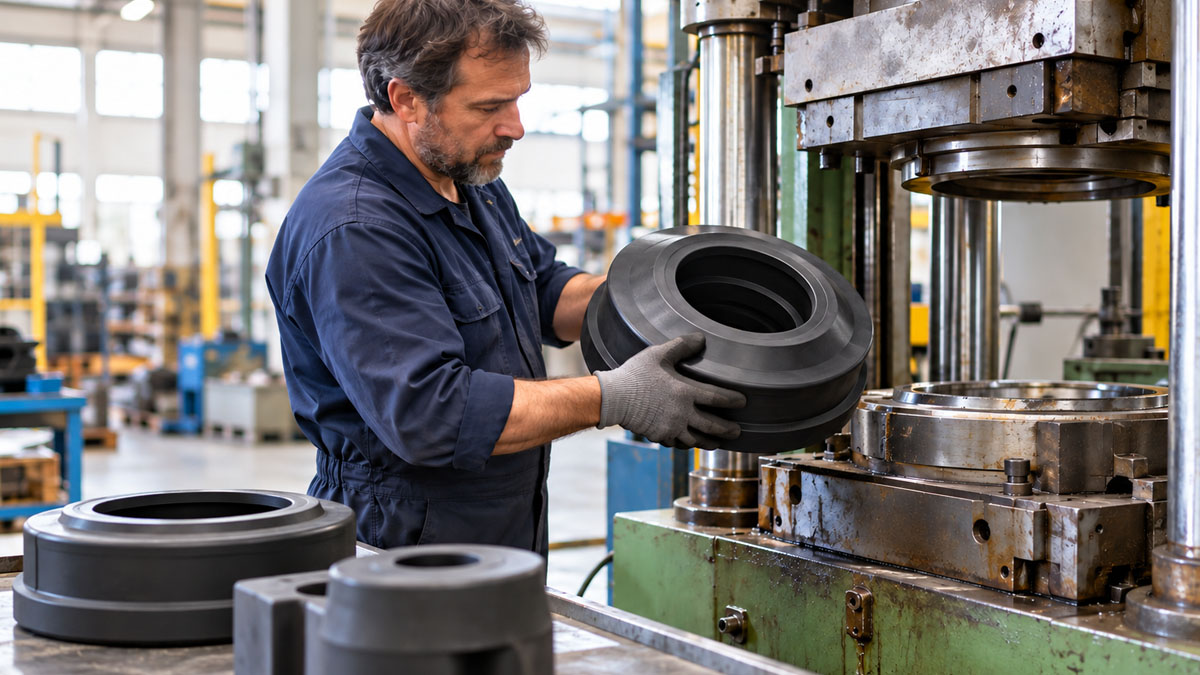
Some parts are just big, and big parts create problems for processes built around fast-flowing liquid material filling a narrow cavity. A large, thick-walled component tends to favor a slower, more deliberate pressing process, because you’re not fighting to push material through tight, complex pathways the way you would with a thinner, more intricate design. The material sits in the cavity and gets pressed directly into shape, which handles bulk and thickness far more gracefully than trying to force it through a narrow gate.
Tooling Costs Tell a Different Story Here
This is probably the biggest reason smaller operations and lower-volume runs still lean toward this method. The tooling itself tends to be simpler and considerably less expensive to build than what a high-precision, high-cycle production tool requires. That matters enormously if you’re not planning to run a hundred thousand parts. Spending big money on complex tooling for a run of a few thousand pieces rarely makes financial sense, and this approach lets a business avoid that upfront cost without sacrificing part quality.
Cycle Time Runs Slower, and That’s Not Automatically Bad
Yes, this process tends to run slower per part than faster, more automated alternatives. But slower isn’t the same as worse. For lower-volume production, cycle time efficiency matters a lot less than people assume, because you’re not trying to squeeze maximum throughput out of every single minute of press time. A shop running smaller batches can absorb a longer cycle time without it meaningfully affecting overall cost or delivery schedule.
Flash and Trim Waste Are Real, But Manageable
Every part that comes off this kind of press needs some trimming afterward, since material gets forced out along the parting line during the pressing stage. That’s just part of how the process works. It’s not free, and it does add a labor step that faster automated processes might skip entirely. But for the applications where this method makes sense in the first place, that trim step is a small tradeoff against the tooling savings and material flexibility the process offers overall.
Material Flexibility Is Genuinely Underrated
One thing that doesn’t get talked about enough is how well this approach handles material changes. Switching compounds on a complex injection tool can be a real hassle, sometimes requiring cleaning cycles or even tooling adjustments. With a simpler pressing setup, switching material between runs tends to be far less disruptive, which matters a lot for shops running smaller batches of different compounds for different customers throughout a given week.
This flexibility also extends to custom compound work. A shop testing a new formulation, or working with a specialty material in limited quantity, generally has an easier time doing that kind of experimentation with a simpler tool that doesn’t require a full retooling investment before you can even run a sample batch.
Where It Genuinely Falls Short
None of this means the older approach wins everywhere. High-volume production of small, intricate parts almost always favors faster, more automated alternatives, since cycle time and labor cost per part completely change the calculation once you’re running huge quantities. Complex geometries with fine detail also tend to come out cleaner through a process built around flowing material into every corner of a cavity rather than pressing a solid mass into shape. Knowing where the line sits matters more than picking a favorite method and forcing every project through it.
A part with thin walls, tight internal features, or a lot of fine surface detail is usually a bad candidate for pressing. You’ll fight the process the whole way, and the results usually show it. That’s not a knock against the method. It’s just not the right tool for that particular job, the same way you wouldn’t use a hammer where a screwdriver actually belongs.
Gaskets, Seals, and Mounts Keep This Process Relevant
A huge amount of the industrial world still runs on parts that fit squarely into this method’s sweet spot. Gaskets, large seals, vibration mounts, and similar components show up constantly in automotive and heavy equipment applications, and compression molding rubber remains the practical choice for a large share of that work even as other techniques have advanced elsewhere. The process hasn’t stuck around out of habit. It’s stuck around because it genuinely still fits the job for an enormous range of parts.
Getting a Quote That Actually Reflects the Right Process
A supplier who understands both methods should be able to explain clearly why one makes more sense for your specific part, not just default to whatever equipment happens to be sitting idle that week. If a quote doesn’t include some reasoning behind the process recommendation, it’s worth asking for one. A good supplier wants the process to fit the part, not the other way around, and they should be able to say so plainly when you ask.
Conclusion
Choosing the right production method comes down to part geometry, volume, and how much you’re willing to invest in tooling upfront, not which process sounds more modern. For the right kind of part, the older approach still holds up as the smarter, more cost-effective choice, and it isn’t going anywhere anytime soon.