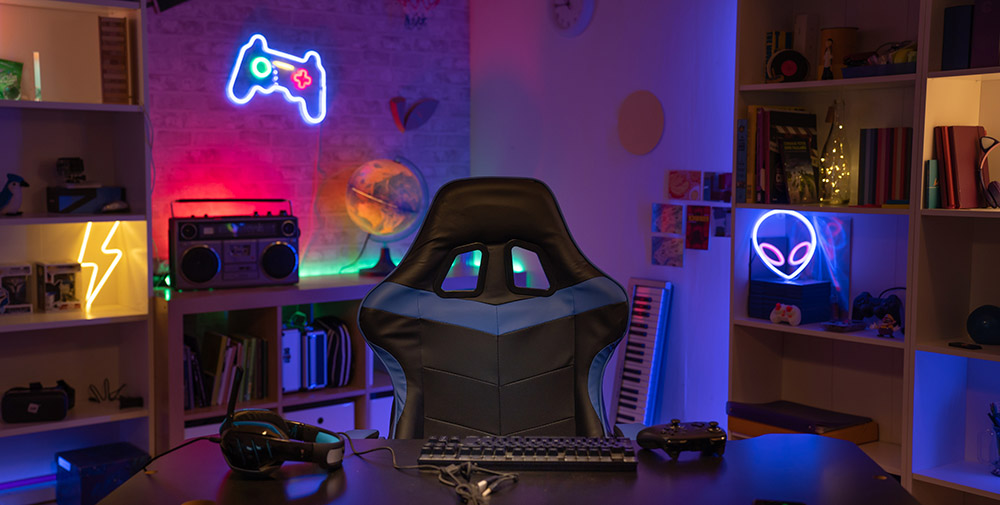
Sports rooms have a special talent for becoming crowded very quickly. One signed cap appears on a shelf. Then a jersey needs a frame. Then a stack of vintage programs arrives. Before long, the room looks less like a stylish retreat and more like a sports store after a minor earthquake.
The solution is not to hide your fandom. It is to give it structure. A well placed neon sign can provide the visual anchor that brings furniture, memorabilia, and color together. Instead of every item shouting for attention, the room gets a clear rhythm. The sign becomes the bright captain of the décor, while everything else learns to pass the ball.
Start With The Feeling You Want
Before choosing a design, decide what kind of mood the room should create. A sports space can feel lively, sophisticated, nostalgic, playful, or intensely competitive. The lighting should support that personality.
A bright basketball outline can make a recreation room feel energetic and ready for a tournament. A glowing word or simple team inspired symbol may work better in a lounge where people watch games, talk, and eat something that leaves suspicious orange dust on their fingers. A calmer color can suit a bedroom, while stronger saturated tones can give a garage or game room plenty of attitude.
Think of the room as having a soundtrack. Fast colors and sharp shapes feel like an arena introduction. Softer tones feel more like the quiet moment before kickoff. Neither approach is wrong. The mistake is choosing a sign that belongs to one mood and surrounding it with décor from another.
Choose A Wall That Deserves The Attention
The most attractive sign in the world cannot rescue a wall hidden behind a bookcase, television, or enormous exercise machine. Placement deserves attention before installation begins.
Signs can breathe best on a broad, empty wall. When the space has a pool table, sectional sofa, gaming desk, or home gym equipment, this is helpful. Having some space around the light prevents it from looking like a decorative traffic jam.
Consider what people see when they first enter. A sign placed directly across from the doorway can act like a visual welcome. One positioned behind a sofa can create a strong backdrop for conversations and photographs. In a media room, placing it away from the television may prevent glare and keep the screen from competing with the glow.
The viewing height matters too. A sign mounted too high can feel disconnected from the furniture below it. A sign installed too low may become a target for wandering shoulders, enthusiastic celebrations, and one very curious dog. Aim for a position that can be seen comfortably from the main seating area.
Let The Furniture Build A Supporting Cast
A neon sign should not have to perform a solo act while every other object in the room stares blankly into the distance. Furniture can reinforce its role without becoming overly coordinated.
Try placing a low console, narrow shelf, or simple bench beneath the sign. This creates a visual base and gives you a place for a few carefully selected items. A basketball, mini helmet, framed ticket, or small trophy can sit below the light without making the wall feel overloaded.
Chairs can also reflect the sign’s personality. Because of its peaceful background, a charcoal sofa pairs well with bright red or blue lighting. Bright hues feel less modern and more welcome with warm wood furnishings. Bold graphic signs on industrial metal pieces may work in a garage or game room.
Avoid matching every item exactly. If the sign is blue, the sofa does not need to be blue, the rug does not need to be blue, and the snack bowls absolutely do not need to be blue. Repeating a color in two or three smaller details is usually enough to make the room feel connected.
Use Memorabilia With A Little Breathing Room
Memorabilia becomes more impressive when it is given space. A single framed jersey can look important. Seven jerseys packed together can look like laundry that has developed a business plan.
Arrange items in groups rather than spreading them randomly across every available surface. A sign might sit above a small collection of related objects, such as one framed photograph, one ball, and one piece of equipment. The group feels intentional because each item has room to be noticed.
Shelving is useful for adding height and depth. Place larger objects toward the bottom and smaller pieces higher up. Vary the shapes so the display does not become a parade of rectangles. A triangular pennant, round ball, and framed print create more visual movement than several identical frames lined up like stern office managers.
Leave some wall visible. Empty space is not wasted space. It gives the eye somewhere to rest and helps the illuminated sign remain the star.
Create Layers Of Light
One glowing sign can change the room, but several types of lighting can make it feel complete. Overhead lighting is useful for cleaning, finding lost remote controls, and discovering who left a sock beside the treadmill. It is not always the best choice for relaxing.
Add softer sources around the room. Floor lamps, table lamps, cabinet lights, or small accent lights can reduce harsh shadows and make the neon glow feel more integrated. If the sign is colorful, use warm white lighting elsewhere to prevent the room from looking like it is preparing to launch into outer space.
Dimmers are particularly helpful. A sign that feels perfect during an afternoon watch party may seem too powerful late at night. Adjustable lighting lets the room move from lively hosting space to comfortable wind down zone without requiring a complete redesign.
In a media room, place the sign at an angle or on a side wall if possible. The goal is to enjoy the glow without creating reflections on the screen. In a bedroom, a lower brightness setting can keep the atmosphere calm rather than turning bedtime into a surprise championship ceremony.
Pick A Size That Fits The Conversation
Scale is one of the easiest ways to make a room feel polished or awkward. A tiny sign on a huge wall may look lonely, as if it arrived at the party without knowing anyone. An oversized sign in a compact room can dominate every conversation, including conversations that have nothing to do with sports.
Measure the wall and the furniture beneath it before ordering. A sign above a console should relate to the console’s width. A sign over a sofa should feel substantial enough to hold the wall, but it should not extend so far that the seating looks trapped beneath it.
Small signs are excellent for personal corners, desks, shelves, bedside areas, and compact workout spaces. Larger designs work well as the main feature in basements, garages, lounges, and entertainment rooms. When in doubt, use painter’s tape to outline the proposed dimensions on the wall. This simple trick can prevent the classic mistake of buying something that looked modest online and arrives with the presence of a small aircraft.
Design For More Than Game Day
The best sports room should still feel enjoyable when no match is playing. Build the space around everyday comfort rather than treating it like a temporary broadcast studio.
Choose seating that works for reading, gaming, or casual conversation. Include storage for controllers, blankets, equipment, and snacks. Add artwork that reflects broader interests so the room feels personal instead of assembled from one team shop. A travel photograph, vintage advertisement, favorite book, or unusual piece of sports history can make the space more distinctive.
The sign can remain the most dramatic element while the rest of the room becomes flexible. On game day, bring out extra flags and cushions. During the week, the same area can serve as a lounge, study corner, or place to recover from an ambitious attempt at five a side football.
Keep Installation Safe And Practical
A beautiful sign should not be mounted where a stray ball can test its engineering. Check the wall surface, choose suitable hardware, and keep cords tidy. Cable channels or painted cord covers can prevent wires from becoming an accidental piece of abstract art.
Think about ventilation and access to the power switch. If the sign is placed behind a large cabinet, turning it on may require the flexibility of a professional gymnast. Make the controls convenient, especially if the room is used at night.
Keep moisture in mind as well. A sign intended for an indoor room may not be suitable for a damp garage, covered patio, or area beside a sink. Practical planning protects both the décor and the people enjoying it.
FAQ
How many sports neon signs should one room have?
For most rooms, one main sign is enough to establish a focal point. A second smaller sign can work in a large space or separate zone, such as a bar corner or gaming desk. Several large signs may compete with one another and make the room feel visually noisy.
What wall color works best behind a neon sign?
Dark or neutral walls usually make illuminated colors stand out clearly. Charcoal, navy, deep green, warm gray, and black can create a dramatic background. Lighter walls also work, especially when the sign has a strong outline, but the glow may appear softer.
Can a sports neon sign work in a bedroom?
Yes. Choose a compact design and place it above a dresser, desk, or doorway rather than directly beside your pillow. A dimmer or lower brightness setting can keep the room relaxing while still showing plenty of personality.
Should the sign match team colors exactly?
Not necessarily. Matching colors can create a clear theme, but a complementary shade may fit the room better. The goal is to balance personal loyalty with the existing furniture, wall color, and artwork.
What should go below a sports neon sign?
A narrow console, floating shelf, bench, or simple memorabilia display can give the sign a visual foundation. Keep the arrangement selective. One ball, framed item, or small trophy can have more impact than a crowded collection.
How can a neon sign work in a small room?
Select a smaller design, use an uncluttered wall, and avoid placing it among too many competing objects. A compact sign above a desk or shelf can add character without taking up floor space or making the room feel cramped.