The Smallest Station Can Control the Biggest Bottleneck
In a busy facility, attention usually goes to impressive machinery. A robotic arm swings like a caffeinated octopus, forklifts zip across the floor, and conveyor belts hum with the confidence of a marching band. Meanwhile, the humble workbench sits quietly in the corner, holding bolts, gauges, parts, and occasionally someone’s forgotten lunch.
That quiet station can determine whether a process moves smoothly or crawls along like a shopping cart with one bad wheel.
An industrial workbench gives workers a dependable place to assemble, test, sort, repair, and package products. More importantly, it creates a repeatable work environment. When tools, materials, and equipment have assigned locations, employees spend less time improvising. They do not need to hunt through cardboard boxes, balance parts on a pallet, or use a screwdriver as a makeshift paperweight.
A well-designed station turns scattered activity into a controlled sequence. Parts arrive on one side, work happens in the center, and finished items leave on the other. This arrangement makes the process easier to understand and easier to improve.
A Better Bench Makes Standard Work Possible
Factories often rely on standard operating procedures, but a document cannot force a messy station to behave. The workbench provides the physical setting where those procedures become practical.
The assembly station may need six parts, three hand tools, a torque driver, and a quality checklist. Each employee develops a routine if these items are scattered. One worker places the torque driver left. Under packaging material, another hides it. A third borrows one from a nearby station and starts a tiny workplace treasure hunt.
A properly arranged bench supports the same sequence every time. Parts can be positioned in order of use. Frequently handled tools can sit within the primary reach zone. Less common equipment can remain in drawers or side cabinets. This arrangement helps new employees learn faster and makes experienced employees more consistent.
Standardization also makes errors easier to spot. If a tool is missing from its marked location or a component bin is empty, the problem becomes visible immediately. The station itself acts like a quiet supervisor, minus the clipboard and dramatic sighing.
Ergonomics Is More Than Comfort
Ergonomics often gets treated as a comfort feature, but it also influences accuracy, endurance, and attendance. A worker who twists, stretches, or bends repeatedly will eventually pay for those movements with fatigue. Tired employees are more likely to drop parts, misread instructions, or tighten a fastener with the confidence of a superhero and the precision of a lawn chair.
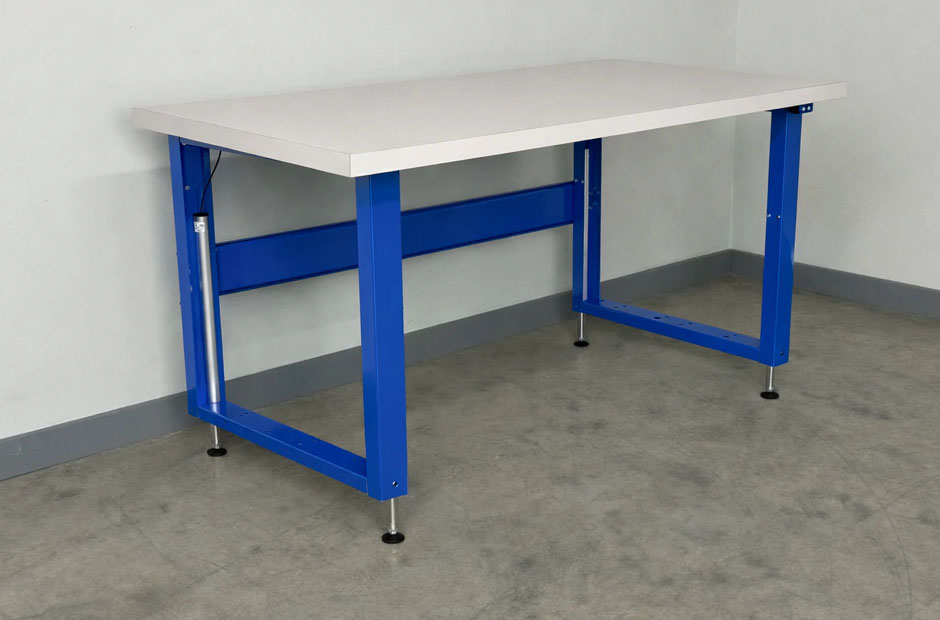
Bench height should match the task. Detailed inspection and delicate assembly generally work better at a higher level that keeps the worker’s head upright. Heavy manual work may require a lower, sturdier surface that allows the worker to apply force safely. Adjustable models offer a practical answer when several employees share one station or when the work changes throughout the day.
Foot clearance matters too. Workers should be able to stand close to the work surface without bumping their knees against a cabinet. Rounded edges reduce contact injuries, while stable legs prevent the bench from wobbling during pressing, measuring, or assembly.
The bench’s surroundings should be ergonomic too. Clear floors let workers turn without hitting carts. Squinting and uncomfortable neck positions are reduced by good illumination. Anti-fatigue flooring reduces fatigue during lengthy shifts. Although minor, discomfort might build during an eight-hour shift.
The Workbench as a Quality Control Tool
A strong workbench does not merely support production. It can help protect product quality.
Stable surfaces reduce movement during precision tasks. This matters when employees measure components, install small fittings, or inspect finished pieces. A bench that rocks like a tiny amusement ride makes accurate work unnecessarily difficult.
Lighting is equally important. Shadows can conceal scratches, incorrect labels, loose connections, or surface defects. Overhead fixtures, under shelf lights, and adjustable task lamps help workers examine products without turning them into detectives searching for clues in a dim warehouse.
Organization cuts confusion. Visual boundaries are created by separating incoming parts, work in progress, and finished things. Model and production stage materials can be color-coded. Vertical dividers separate comparable metal parts.
Some operations benefit from integrated scales, test equipment, barcode scanners, or computer mounts. When these tools remain attached to the station, employees can record results at the moment they perform the work. Immediate documentation is more reliable than trying to reconstruct an entire shift from memory, vague notes, and one suspicious coffee stain.
Designing for Leaner Movement
Each superfluous step takes time, even if it seems innocent. One socket retrieval may take 15 seconds. Repeat that excursion dozens of times a day, and the workbench quietly wanders for many minutes. A lot of money is spent on those minutes across stations and shifts.
A useful layout places the most common tools between the worker’s shoulders and waist, close enough to reach without leaning. Heavier items should stay at a comfortable lifting height rather than on the floor or above the head. Small parts can sit in angled bins that make labels visible from the working position.
Mobile workbenches increase versatility. A rolling station might accompany a temporary production cell, roll toward a repair place, or assist with equipment shutdown maintenance. Locking casters stabilize the unit upon arrival. Without locks, the bench may roll away when pressure is applied, turning a commonplace operation into industrial farce.
A thoughtful layout also considers replenishment. Supply bins should be accessible to material handlers without forcing them to enter the worker’s primary movement area. This separation keeps restocking from interrupting production and reduces the risk of collisions.
Power and Technology Belong at the Station
Modern workbenches increasingly support more than hand tools. Workers may need monitors, scanners, printers, chargers, testing instruments, or pneumatic equipment. Running loose cords across the floor creates trip hazards and makes cleaning difficult.
Integrated power rails and cable management keep connections organized. Retractable electrical outlets reduce dangling wires. Grounding features are essential when the station handles sensitive electronics or conductive materials. Pneumatic lines can be routed along the frame so they remain available without becoming a tangled nest.
Monitor arms and computer mounts can display digital instructions at eye level. It enables workers assemble the goods without looking away. Additionally, it saves surface area. A monitor next to a package of parts can take up half the bench and provide little structural support.
Technology should serve the task rather than turn the bench into a cockpit. A station covered in screens, chargers, cables, and blinking gadgets may look impressive, but if the worker cannot find a wrench, the design has wandered into theater.
Selecting a Surface That Survives Real Work
The best work surface relies on punishment. Smooth laminate tops that resist stains and wipe down fast may help a clean assembly environment. Repair shops need a surface that can withstand grease, tools, and drops. Heavy fabrication demands a sturdy metal top that can handle heat, impact, and loads.
Wood surfaces offer useful shock absorption for certain manual tasks. They can protect delicate tools and reduce harsh noise when parts are placed on the bench. Metal tops provide strength and durability, but they may require additional protection when handling sensitive components.
Static control is especially important in electronics environments. A suitable conductive surface, proper grounding, and compatible accessories help prevent invisible electrical damage. Static electricity may be too small to see, but the resulting failure can be impressively expensive.
Take chemical resistance into account. A surface not intended for adhesives, solvents, oils, and cleaning chemicals can be damaged. Matching material to work reduces swelling, staining, cracking, and the gradual turning of a bench into a sticky archeological site.
Maintenance and Longevity Matter
A workbench is a long term operating asset, not disposable scenery. Strong frames, replaceable tops, durable drawer slides, and accessible hardware make repairs easier. Modular designs allow facilities to add shelves, bins, lighting, or power accessories as needs change.
Regular inspection should include caster condition, fasteners, drawer operation, electrical components, and surface damage. A loose bolt or damaged cable can create larger problems if ignored. Cleaning routines also protect the station. Dust and metal shavings can interfere with drawers, contaminate products, and turn smooth surfaces into abrasive sandpaper.
When a workbench remains stable, clean, and adaptable, it continues supporting productivity long after the novelty of its arrival has disappeared. That is the real test of good equipment. It should become part of the operation without becoming another problem for the operation to manage.
FAQ
What is the main purpose of an industrial workbench?
An industrial workbench provides a stable, organized, and task appropriate station for assembly, repair, inspection, packaging, or technical work. It supports efficient movement while keeping tools and materials accessible.
How do I choose the correct workbench height?
Choose a height based on the task. Precision work usually benefits from a higher surface, while force intensive work often requires a lower position. Adjustable benches work well for shared stations and changing processes.
Are mobile workbenches suitable for production areas?
Yes. Mobile workbenches can support flexible production cells, maintenance tasks, and temporary setups. They should have strong casters and reliable locking mechanisms to remain stable during use.
What accessories improve workbench organization?
Useful accessories include drawer units, bin rails, shelves, tool holders, lighting, monitor arms, power outlets, cable management systems, and overhead panels. The best choices depend on the tools and materials used at the station.
Why does the workbench surface material matter?
Surface material affects durability, cleaning, safety, and task performance. Laminate handles many general applications, wood absorbs impact, steel supports heavy or hot work, and conductive materials help protect sensitive electronics.
How can a workbench support quality control?
A stable surface, strong lighting, organized parts storage, and integrated inspection equipment help workers detect defects and follow consistent procedures. Clear separation between incoming, active, and completed work also reduces mix-ups.
What features help reduce worker fatigue?
Adjustable height, adequate foot clearance, rounded edges, supportive flooring, suitable lighting, and easy access to frequently used tools can reduce strain. The surrounding layout should also allow workers to move without twisting or reaching excessively.