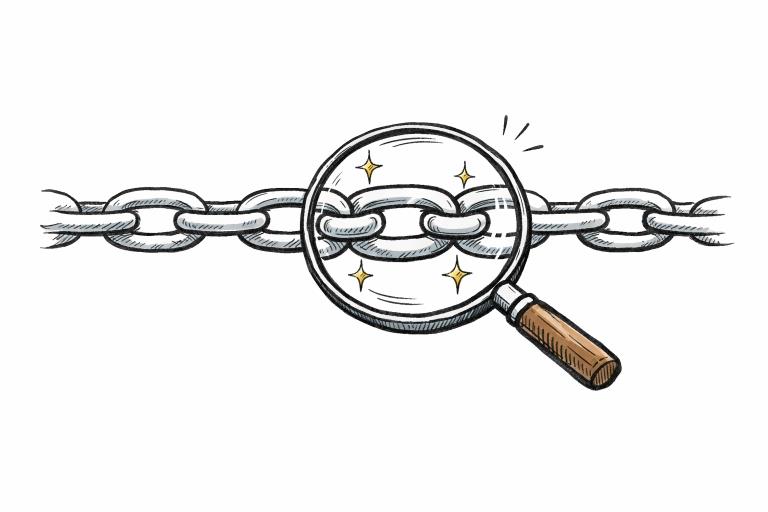
Search engines now detect fake popularity better. One can no longer enter the rankings in a trench coat full of random hyperlinks and expect appreciation. Instead than accumulating links, modern link building involves becoming recognized by websites that understand, use, and appreciate your content.
A strong backlink profile resembles a respected professional network. The connections make sense, the introductions feel natural, and nobody is loudly announcing that they paid twelve suspicious websites to mention them. When done well, link acquisition can strengthen visibility, attract referral traffic, support brand credibility, and create relationships that remain useful long after a campaign ends.
Think Like a Publisher Before Thinking Like a Marketer
The best link building campaigns begin with a publishing mindset. Instead of asking, “How can I get someone to link to this page?” ask, “What could I create that another publisher would feel proud to recommend?”
This shift changes everything. A bland sales page rarely inspires a journalist, educator, or industry blogger to share it. A detailed calculator, original study, visual tutorial, or practical resource has a much better chance. Publishers link to pages that make their own work easier, clearer, or more interesting.
Determine the target audience before generating an asset. Financial planning websites may include retirement cost calculators. A software company may create a troubleshooting library. A cooking brand may offer a searchable ingredient substitution tool for the frantic cook with an empty pantry.
Useful content earns attention because it solves a real problem. It does not need to wear a tuxedo or use words such as “revolutionary” every four sentences.
Build Assets With a Reason to Be Referenced
A page can be informative without being linkable. The difference often lies in how easily another person can use it as evidence, explanation, or a starting point.
Linkable assets commonly include:
- Original surveys with clear methodology
- Industry benchmarks and trend reports
- Interactive calculators and planning tools
- Downloadable templates
- Expert interviews with practical takeaways
- Data visualizations
- Glossaries that clarify confusing terminology
- Step by step technical tutorials
- Case studies containing measurable outcomes
The strongest assets usually offer something difficult to reproduce quickly. Fresh data, specialized experience, or a polished tool gives publishers a reason to cite the page instead of writing another generic paragraph themselves.
Presentation matters as well. If valuable research is hidden inside a giant wall of text, it may remain undiscovered. Use descriptive headings, concise summaries, charts, examples, and visible takeaways. Make the page easy to scan for both busy humans and search engine crawlers.
Find Link Opportunities Through Audience Overlap
Traditional prospecting often starts with lists of websites. A smarter approach starts with audiences.
Imagine the people who would benefit from your content. Which organizations already serve them? Which newsletters do they read? Which podcasts do they listen to? Which professional communities do they visit? Which educators, analysts, and creators answer their questions?
This process reveals opportunities that a basic competitor backlink report may miss. A cybersecurity guide might attract links from technology publications, but it could also be valuable to universities, business insurance providers, remote work platforms, and professional training programs.
Audience overlap produces more natural outreach because the relationship is based on shared usefulness. You are not tossing a link request into the internet like a message in a bottle. You are presenting a resource to someone whose readers may genuinely need it.
Turn Existing Mentions Into Relationships
Some of the easiest link opportunities are already sitting nearby, wearing a tiny disguise.
Look for websites that mention your company, products, research, employees, events, or original ideas without linking to the relevant page. These unlinked mentions can often be converted through a polite, simple message.
The outreach does not need to sound like a courtroom petition. A short note can identify the mention, thank the publisher for including the brand, and point out a page that would help readers learn more. The request should be useful rather than demanding.
You can also check obsolete links in field-related articles. Offering a relevant replacement for a missing resource is appropriate. Replacement is crucial. Sending a random homepage to a research technique page is not outreach. Digital door-knocking with the wrong address.
Make Outreach Sound Human
Outreach fails when every message feels assembled by a committee of robots. Personalization does not mean inserting a recipient’s first name into a template and calling it a day. It means demonstrating that you understand the person’s publication, audience, and reason for caring.
A thoughtful message might mention:
- A specific article they published
- A gap or useful extension related to that article
- Why your resource fits their readers
- The exact page being suggested
- Any relevant experience or data behind your resource
Keep the message brief. Editors and creators are busy people with inboxes that resemble crowded airports. Explain the value quickly and let them decide.
Avoid exaggerated praise, fake familiarity, and guilt trips. Nobody enjoys receiving a paragraph that begins with “I have been following your amazing work for years” from a stranger who cannot name one article. Honest communication is more persuasive than theatrical flattery.
Use Digital Publicity Without Chasing Every Headline
Publicity can generate powerful links, but not every announcement deserves a marching band. A campaign needs a clear story, a timely angle, or useful information.
Consider connecting your expertise to:
- A seasonal business challenge
- A newly observed customer behavior
- A surprising industry statistic
- A practical response to a common news topic
- A public dataset that needs explanation
- A local event or community issue
- A product or process innovation with measurable results
A strong publicity idea gives writers something to discuss, not merely something to copy. Add commentary, context, visuals, or expert interpretation so the story has substance.
Timing also matters. A relevant insight delivered while a topic is receiving attention has a greater chance of being noticed. However, forcing your brand into every trending subject can make it look like an eager pigeon wandering through a parade. Relevance should come first.
Participate in Communities Without Becoming a Billboard
Forums, professional groups, question and answer platforms, and industry communities can support visibility and relationships. They can also expose self promotion instantly.
The most effective participation begins with helping. Answer a question completely. Explain a complicated concept in plain language. Share a process that worked. Mention your own resource only when it directly improves the answer.
Community members notice consistent generosity. Over time, people may visit your site, share your material, or reference your work elsewhere. These outcomes are more valuable than a pile of shallow comments containing links that nobody clicks.
A useful rule is to contribute more information than promotion. If every post points back to your website, the community will treat your account like a pop up advertisement with a username.
Measure More Than Link Counts
A campaign can earn many links and still perform poorly. Quantity alone does not reveal whether the links are relevant, visible, or useful.
Track several types of results:
- Referring domain quality
- Topical relevance
- Referral visits
- Engagement from referred visitors
- Assisted conversions
- Brand mentions
- New relationships with publishers
- Performance of the linked page
- Growth in visibility for related search terms
Look for patterns. Practical templates may generate more referrals than opinion pieces. Smaller niche sites may send more qualified visitors than large broad publications. When these details inform content and outreach, a campaign becomes smarter.
It is also worth reviewing the health of your backlink profile regularly. Investigate unusual spikes, irrelevant placements, and links that appear across hundreds of unrelated pages. The aim is not to panic over every unfamiliar domain. The aim is to understand whether your profile reflects real editorial interest.
Treat Technology as a Research Assistant
Automation can make prospecting and monitoring faster, but it should not become the personality of the campaign. Tools can help organize contacts, identify content gaps, compare competing pages, group prospects by topic, and schedule follow ups.
Human judgment is vital. Software may find a website relevant because it shares a few keywords, but a person may realize it is abandoned, poorly maintained, or targeting a different demographic. Technology sorts haystacks. It may misidentify the needle.
Use automated assistance for repetitive tasks, then review important prospects manually. Check the publication quality, audience fit, recent activity, editorial standards, and likely value of the relationship before sending a message.
Protect the Long Term Value of Your Work
Sustainable link building is built on patience. Some assets attract attention immediately, while others gain links slowly as more people discover them. A useful guide might be referenced months after publication by someone researching a related topic.
Keep important resources updated when facts, tools, regulations, or industry practices change. An outdated asset can lose its usefulness and quietly shed its appeal. Refresh statistics, repair broken references, improve confusing sections, and add new examples when appropriate.
Strong links are not trophies to collect and forget. They are signs that your website has become part of a wider information network. The more consistently your content helps people understand, compare, calculate, or act, the more naturally that network grows.
FAQ
What makes a backlink valuable?
A valuable backlink usually comes from a trustworthy, relevant website and appears in useful editorial context. It should help readers reach a page that adds meaningful information. A link from a respected specialist publication can be more useful than many unrelated links from weak websites.
Are all links from high authority websites beneficial?
No. Authority matters, but relevance and context matter too. A link from a famous website may have limited value if it appears on an unrelated page, carries no real editorial purpose, or sends no interested visitors. The best links combine credibility with audience alignment.
How often should a company conduct link building outreach?
Outreach should be consistent but not frantic. A manageable campaign each month is often better than occasional bursts of mass emailing. Regular activity gives you time to create worthwhile assets, personalize messages, follow up appropriately, and learn from performance data.
Can small websites compete for quality backlinks?
Yes. Smaller websites can earn strong links by offering specialized knowledge, original data, useful tools, local expertise, or unusually practical content. A narrow resource that solves a specific problem may attract more genuine interest than a broad article trying to appeal to everyone.
Should every backlink use the same anchor text?
No. Natural backlink profiles usually contain varied anchor text, including brand names, page titles, descriptive phrases, and ordinary terms such as “this guide.” Repeating one keyword rich phrase excessively can look unnatural and may reduce trust in the profile.
What is the biggest link building mistake?
The biggest mistake is treating link building as a numbers game. Sending generic requests to unrelated websites, publishing thin content, or chasing links without considering readers often produces weak results. Successful campaigns focus on usefulness, relevance, and credible relationships.