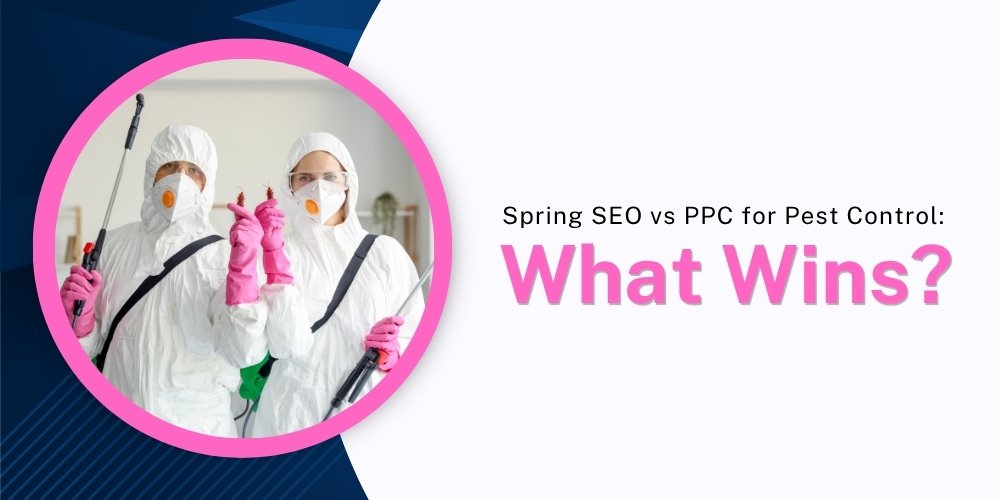
Why Spring Changes the Lead Generation Game
Spring does not gently knock on the door of pest control demand. It barges in carrying ants, termites, mosquitoes, rodents, and enough phone calls to make a receptionist question every life decision.
Property owners notice activity that was hidden throughout winter when temperatures rise. Ant trails flank kitchen windows. Termites are more noticeable around wood. Mosquitoes make backyards airports. Rodents seek food and refuge wherever they can.
This seasonal surge creates a valuable opportunity for pest control companies. However, the businesses that gain the most leads usually prepare before demand reaches its loudest point. Search engine optimization and pay per click advertising can both help, but they serve different purposes.
SEO works like planting a sturdy tree. It takes time to grow, but eventually it can provide shade for months or years. PPC works more like renting a billboard on the busiest road in town. It attracts attention quickly, but the sign disappears when the payment stops.
Understanding how to use both channels helps pest control companies avoid wasting money or waiting too long for results.
The Role of SEO Before Pest Season Peaks
SEO is most effective before spring searches peak. Search engines take time to find, rank, and assess websites. A company that publishes material during peak termite season may still benefit, but it may spend weeks watching competitors shine.
A strong SEO campaign should include service pages that match real customer needs. Instead of relying on one broad page titled “Pest Control Services,” companies can create focused pages for services such as:
- Termite inspections
- Ant extermination
- Mosquito control
- Bed bug treatment
- Rodent removal
- Wasp nest removal
- Cockroach control
Each page should explain the problem, describe the treatment process, identify warning signs, and make it easy for visitors to request an appointment. Customers want answers quickly. They do not want to complete a digital scavenger hunt just to find a phone number.
Local SEO is important too. Customers seek pest control near their homes or businesses. Location pages can help a company appear in neighboring city, neighborhood, and service area searches. A good local page should not repeat city names like a drowsy robot.
Companies should also keep their business information accurate across important online listings. Correct phone numbers, service areas, operating hours, and business categories make it easier for customers to trust the company and contact it.
How PPC Creates Immediate Spring Visibility
PPC gives pest control companies a faster way to reach people who are actively searching for help. When a homeowner sees termites near a window frame or discovers a wasp nest under the porch, patience becomes a very unpopular household value.
Paid search campaigns can place a company in front of these urgent customers almost immediately. Ads can target phrases that indicate strong buying intent, including:
- Pest control near me
- Same day exterminator
- Termite inspection
- Emergency rodent removal
- Ant exterminator in my area
- Mosquito treatment service
The advantage is speed. A properly configured campaign can begin generating calls and form submissions shortly after launch. This makes PPC especially useful for new companies, businesses entering a new market, or teams with unused appointment capacity.
Businesses may manage when and where ads display with PPC. Increase visibility throughout business hours, target surrounding cities, or market seasonal services. The campaign can be changed without waiting for a website to climb the search ranks in hiking boots if mosquito complaints spike after a week of rain.
However, paid traffic needs careful management. Broad keywords can attract curious visitors, job seekers, do it yourself researchers, and people who believe every pest problem can be solved with a heroic kitchen spray bottle. Narrower targeting and clear ad copy can reduce wasted clicks.
Why Landing Pages Matter More Than Many Companies Expect
Sending every paid visitor to the homepage is one of the quickest ways to make a campaign feel like a leaky bucket. The visitor searches for termite treatment, clicks an ad, and lands on a page discussing every service from fleas to pigeons. Confusion arrives before the customer does.
Each major PPC campaign should lead to a page that matches the advertisement. A termite ad should lead to a termite page. A mosquito ad should lead to a mosquito page. The page should explain the service, highlight benefits, answer common concerns, and provide a visible call button or contact form.
Effective landing pages often include:
- A clear headline related to the search
- A short explanation of the treatment
- Service area information
- Trust signals such as reviews or guarantees
- A simple booking form
- A prominent phone number
- Information about response times
The goal is not to create a digital encyclopedia. The goal is to help a worried customer move from “Something is eating my house” to “A professional is coming Tuesday.”
Matching Marketing Channels to Customer Intent
SEO and PPC perform differently because customers use search engines with different levels of urgency.
Someone searching for “how to prevent ants in spring” may be gathering information. That person might become a customer later, but probably does not need a truck in the driveway within the next hour. Informational content can attract this audience through SEO and build familiarity with the company.
Someone searching for “exterminator open now” has a different mindset. This person may be standing beside a garbage can while watching a cockroach sprint toward freedom. PPC can reach this customer with a direct offer and an immediate contact option.
A balanced marketing plan addresses both intents. Helpful organic content attracts early researchers, whereas paid campaigns draw urgent purchasers. The useful content may also build brand recognition, making customers more inclined to call when a pest problem gets serious.
Making Seasonal Campaigns More Specific
Spring demand is not identical in every location. Weather, housing types, landscaping, and local pest populations influence which services become popular first.
A company in a warm, humid region may see mosquito and termite searches rise early. A business in a cooler area may receive more calls about rodents and ants before outdoor pests become active. Reviewing last year’s call records can reveal useful patterns.
Seasonal PPC campaigns may focus on:
- Termite inspection promotions
- Early spring ant control
- Mosquito reduction for outdoor spaces
- Wasp prevention before nests expand
- Rodent exclusion for homes and businesses
- Packages for recurring pest protection
SEO content can support these campaigns with articles, service pages, and seasonal checklists. A mosquito landing page may perform better when it explains standing water, breeding conditions, treatment schedules, and what customers should expect after service.
Specificity gives marketing a sharper edge. “We eliminate pests” sounds broad and forgettable. “Protect your backyard before mosquito season peaks” gives the reader a clearer reason to act.
Tracking Calls and Leads Accurately
A campaign can look successful while quietly eating the budget for breakfast. Clicks and impressions are useful, but they do not tell the whole story. Pest control companies need to track whether visitors actually call, submit forms, schedule inspections, or become paying customers.
Important measurements include:
- Cost per phone call
- Cost per booked appointment
- Form conversion rate
- Revenue by service type
- Lead quality by keyword
- Organic traffic to service pages
- Repeat customer activity
- Missed call volume
Call tracking shows which campaigns generate real queries versus pocket clicks. A business may find that one keyword produces fewer calls but more termite inspections. Another keyword may attract bargain seekers who ask for a discount before greeting.
Marketing data becomes more useful when connected to actual sales outcomes. If possible, companies should record which leads become appointments and which appointments become completed jobs. This helps identify the channels that generate revenue, not merely digital confetti.
Using PPC Data to Improve SEO
Paid campaigns can provide useful clues for organic strategy. Because PPC produces data faster, companies can identify which search terms attract strong leads and then develop SEO content around those topics.
For example, if a paid campaign performs well for “termite inspection before selling house,” the company could create an organic page addressing inspections during real estate transactions. If “same day ant exterminator” produces frequent calls, a dedicated service page may deserve attention.
PPC can function as a testing laboratory for SEO. Instead of guessing which phrases customers use, businesses can study real search behavior and apply those insights to website content.
Likewise, strong organic pages can support paid campaigns by improving relevance and giving visitors a more useful experience after they click an ad. The two channels do not need to sit in separate corners glaring at each other. They can share information and improve the overall marketing system.
FAQ
Is SEO or PPC better for a new pest control company?
PPC often helps a new company generate visibility quickly because the business does not need to wait for organic rankings. SEO should begin at the same time because it builds credibility and reduces dependence on ongoing ad spending. Using both gives a new company immediate reach and a path toward long term visibility.
How early should pest control businesses start spring marketing?
Businesses should start planning months before peak season. Landing sites, tracking systems, and ad testing should be done before PPC campaigns commence closer to peak demand. Rankings may take time, therefore SEO content should start early.
What pest control keywords usually perform well in PPC?
High-intent phrases include service names and urgency or location. Example keywords: “termite inspection near me,” “same day exterminator,” “bed bug treatment,” and “mosquito control service.” Performance varies by market, so organizations should examine calls and bookings instead of click volume.
Can a small pest control company compete with larger advertisers?
Yes, but the company needs focused targeting. Smaller businesses can concentrate on specific cities, urgent services, seasonal problems, and well written landing pages. Narrow campaigns may produce better results than trying to compete for every broad pest control phrase in an entire region.
How long does SEO take to produce pest control leads?
While competitive service terms take longer, some changes may appear within months. Website quality, local competition, content depth, technological performance, and business reputation affect results. As pages gain authority and get free clicks, SEO becomes more lucrative.
Should pest control companies run ads all year?
Year round advertising can make sense when the business offers services with steady demand, such as rodents, bed bugs, and commercial pest management. Seasonal campaigns can receive higher budgets during periods of increased activity. Reviewing lead quality and revenue by month helps determine when advertising deserves more investment.
What makes a pest control landing page effective?
An effective landing page matches the customer’s search, explains the service clearly, identifies the service area, displays trust signals, and makes contacting the company simple. A visible phone number, short form, clear response promise, and direct information usually work better than a page packed with unrelated details.