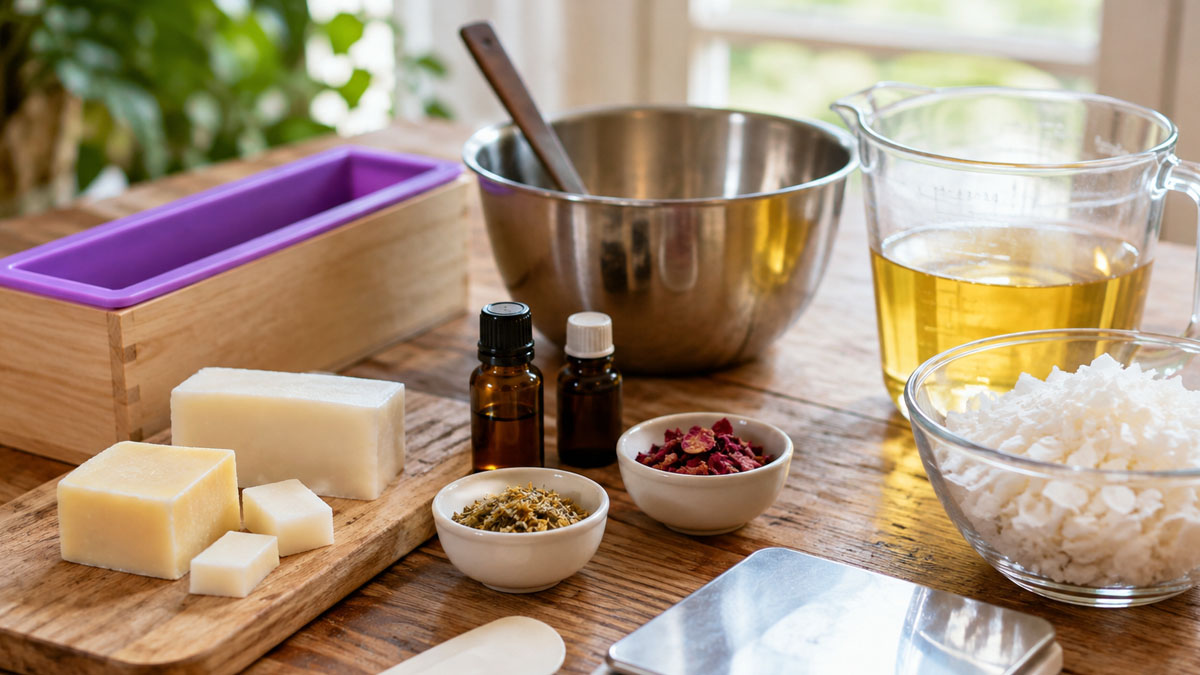
Making soap at home starts with selecting ingredients and materials that align with your production method. Beginners can choose from different supplies depending on whether they plan to use the melt-and-pour, hot process, or cold process approach. Here’s information about choosing soap making supplies that are appropriate for your project:
Choose an Appropriate Soap Base
A first step to purchasing soap making supplies is deciding on an appropriate soap base, especially when using the melt-and-pour approach. Goat milk options offer moisturizing properties, while cocoa butter and shea butter provide a richer, more conditioning feel. Soap makers looking to create more transparent designs can opt for clear glycerin bases. White glycerin provides an alternative option; it has an opaque appearance.
Melt-and-pour bases are pre-formulated, and soap makers can melt them before adding other ingredients. Soap makers stir these additives into the base before pouring the mixture into a mold to create their final product. This makes melt-and-pour soap a convenient option for beginners who want a relatively simple process while still having control over additives, colors, and fragrances.
The cold process approach is more advanced than the melt-and-pour method; it requires mixing lye with oils or other fats. The lye reacts with the fats through a process called saponification, producing soap and glycerin. This method gives soap makers greater control over the oils, additives, fragrances, and other ingredients used in the final product. Cold-process soap also requires a curing period before it is ready for use.
Add Fragrance and Color
Fragrance oils and colorants allow soap makers to alter the sensory and visual characteristics of the finished soap. Fragrance oils are available for different soap making methods, including options for melt-and-pour, cold process, and hot process applications. Soap makers should select a fragrance that performs well with the intended production method; this helps create a suitable finished product. Individuals can also choose from different colorants to create a particular appearance. Soap making supplies include options such as color bars, pigment powders, and mica. These materials can be used individually or combined, depending on the desired colors and designs and whether they are suitable for the chosen soap making method.
Include Additives and Botanicals
Additives and botanicals help introduce texture, color, and visual detail to the finished product. They allow soap makers to customize their formulations based on the desired characteristics or theme of the finished bars; this makes them useful for seasonal soaps, holidays, and special events. Some botanicals and additives that are available at apothecary shops include:
- Oatmeal for texture
- Dried flowers for decorative detail
- Clays for color
- Seeds for exfoliation
Find Soap Making Supplies
Choosing the right soap making supplies starts with determining whether the project will use the cold-process, hot-process, or melt-and-pour method. This helps soap makers select an appropriate base and other tools, such as measuring equipment and mixing containers. Individuals can then choose compatible fragrances, colorants, additives, and botanicals; this helps customize each bar. Begin by reviewing the different soap making methods to establish a clear starting point when purchasing supplies online.