Manufacturers troubleshooting a persistent adhesion problem often start by questioning the adhesive itself — trying a different formulation, adjusting cure time, switching suppliers. More often than not, the actual culprit sits one step earlier in the process: a surface that was never properly prepared to bond in the first place.
Why So Many Materials Resist Bonding Naturally
Many common manufacturing materials — certain plastics, rubber compounds, and specific metal alloys — have a naturally low surface energy that makes them chemically resistant to forming a strong bond with inks, adhesives, coatings, or paint. This resistance isn’t a flaw in the material; it’s simply the material’s natural molecular structure working against whatever needs to adhere to it. Without addressing this underlying surface chemistry directly, even a high-quality adhesive applied with perfect technique will struggle to form a genuinely durable bond.
How Atmospheric Plasma Technology Solves This
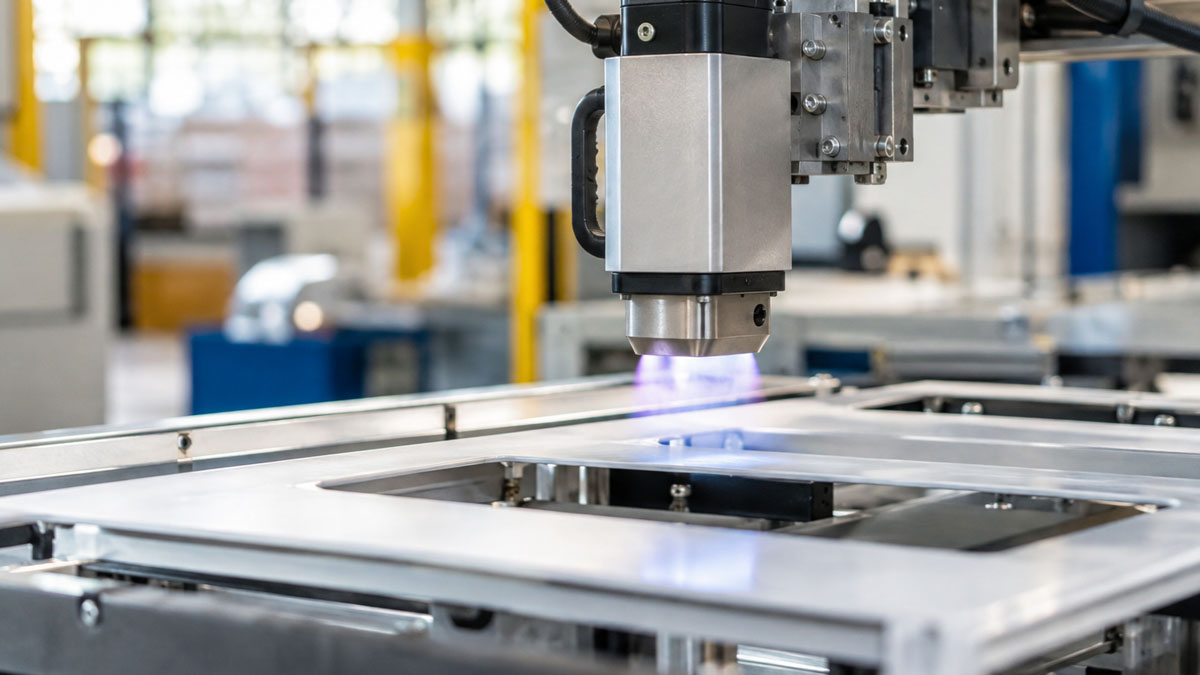
Atmospheric plasma treatment generates a highly ionized stream of plasma energy that restructures the molecular surface of a material as it passes beneath a treating head, raising the material’s surface energy and altering it from a naturally low-energy, hydrophobic state to a much more receptive, hydrophilic one. This transformation happens invisibly — the surface looks unchanged to the eye — but the underlying chemistry shifts dramatically, dramatically improving the surface’s capacity to form a strong, lasting bond with whatever coating, ink, or adhesive gets applied afterward.
A Two-Function Process in a Single Step
Beyond simply altering surface energy, this kind of treatment accomplishes surface cleaning simultaneously, removing organic contaminants, residues, and other impurities that could otherwise interfere with adhesion even on a properly energized surface. Combining cleaning and surface modification into a single continuous process step offers real efficiency advantages over separate cleaning and treatment stages, particularly on high-speed production lines where added process steps directly translate into reduced throughput.
Materials and Applications This Technology Handles
This kind of atmospheric plasma system effectively treats an unusually broad range of substrates — plastics, rubber, metal, glass, ceramic, paperboard, and composite materials — making it genuinely adaptable across countless manufacturing applications rather than limited to a single narrow material category. Common applications include improving ink adhesion on plastic parts, preparing plastic tubing for secure bonding to medical devices, and treating automotive rubber seals before flocking or adhesive application, alongside many other bonding and coating challenges across diverse industries.
Treating Head Configurations for Different Production Needs
Production environments vary considerably in their layout and throughput requirements, and treating head configuration needs to match those specific operational demands. Rotating treating heads cover a wider surface area efficiently, suited to applications requiring broad, uniform coverage across a larger part surface. Stationary heads, often mounted to a robotic arm, offer precise, targeted treatment capable of handling complex part geometries at high line speeds, particularly valuable for parts with challenging shapes that a fixed, broad-coverage approach couldn’t address as effectively.
Why Metal Surface Treatment Presents Its Own Considerations
Treating metal surfaces introduces specific considerations distinct from plastics or rubber, since metal manufacturing processes often leave behind lubricants, coolants, and release agents that need thorough removal before any bonding process can succeed. A properly configured plasma system removes these contaminants effectively from surfaces like stainless steel and various aluminum alloys, optimizing the surface for subsequent processes like gluing, painting, laser welding, or over-molding that depend on a genuinely clean, properly prepared surface underneath.
Sensitive Applications Requiring Non-Conductive Treatment
Certain applications, particularly those involving embedded electronics, flexible circuits, or circuit boards, require a treatment method that won’t damage delicate electrical components during processing. Non-conductive plasma treatment enhances surface wettability on plastic film and similar materials without risking damage to sensitive circuitry nearby, making it a viable option for applications where conductive treatment methods would introduce unacceptable risk to delicate electronic components.
Why Adjustable Power and Treatment Levels Matter
Different applications and materials require different treatment intensities to achieve optimal results without over-treating or damaging a sensitive substrate. Equipment offering adjustable power output provides genuine flexibility to match treatment intensity precisely to a specific material and application, rather than forcing every job through a single fixed treatment setting that might be excessive for delicate materials or insufficient for more resistant ones. PlasmaDyne Pro was specifically engineered with this kind of adjustable capability to accommodate the wide range of materials and applications manufacturers encounter.
Integration Into New and Existing Production Lines
Surface treatment equipment needs to fit into a facility’s actual production environment, whether that means operating as a standalone treatment station or integrating directly into an existing automated production line. Systems designed for this kind of flexibility, along with product handling and automation options suited to a specific facility’s layout, tend to integrate more smoothly than equipment requiring extensive line reconfiguration to accommodate a rigid, inflexible design.
Durability That Holds Up Under Continuous Production
Manufacturing equipment supporting continuous production demands genuine durability, since unplanned downtime for treatment equipment can stall an entire line dependent on properly prepared surfaces moving through at a consistent pace. Systems built with modular replacement parts and robust engineering tend to support the kind of extended, near-continuous operation that high-volume manufacturing environments require, with some installations logging tens of thousands of operating hours while continuing to perform reliably. This kind of proven, long-term reliability matters considerably more to a production manager than any single feature comparison, since equipment downtime carries real, immediate cost across an entire dependent production line.
Conclusion
Persistent adhesion problems often trace back to inadequate surface preparation rather than the adhesive, ink, or coating itself. Atmospheric plasma treatment addresses this root cause directly, raising surface energy and cleaning contaminants in a single process step that sets up every subsequent bonding process for genuine, lasting success.