Key Takeaways
- The lowest asking rent is not always the lowest total occupancy cost.
- Office and retail spaces require different reviews of location, layout, access, and infrastructure.
- Compare every option using the same assumptions for rent, expenses, build-out, concessions, and lease-term increases.
- In Manhattan, permitted use, delivery access, building rules, and customer or employee travel patterns can matter as much as the address.
- Renewal, sublease, expansion, and early-exit rights can have significant business value.
Choosing commercial space in Manhattan involves more than finding an attractive suite or storefront. A business must decide whether the property supports its customers, employees, operations, budget, and growth plans. For companies considering leasing an office in a Manhattan landmark building, the process should begin with a clear picture of how the space will be used every day, not just how it looks during a tour.
Office and retail leases may appear similar at first glance, but the operational questions are different. An office tenant may prioritize elevator service, internet capacity, meeting areas, and transit access. A retailer may need street visibility, signage rights, compliant plumbing, storage, delivery access, and a permitted use that fits the business model.
Why a Lease Comparison Requires More Than a Rent Number
Advertised rent is only one component of occupancy cost. A realistic comparison includes base rent, operating expenses, common-area maintenance charges, property tax or insurance pass-throughs, utilities, parking, security, repairs, construction, moving, and professional fees. Ask each landlord or broker to provide costs in a consistent format and identify which figures are estimates rather than fixed obligations.
Lease labels such as gross, modified gross, net, and triple-net provide a starting point, but the written lease controls. A gross lease may include certain building expenses, while a net lease may place more responsibility for expenses on the tenant. Some retail agreements also include percentage rent, which is additional rent tied to sales under stated conditions. Review how expenses are calculated, when they are reconciled, and whether there are caps on increases.
Step 1: Define What the Business Actually Needs
Before touring, prepare a brief list of requirements. Include current headcount or expected customer capacity, anticipated growth over the next three to five years, preferred neighborhoods, budget, desired lease term, storage needs, meeting rooms, showroom space, service areas, loading requirements, and access to transit or parking. This list helps prevent a polished lobby or dramatic view from outweighing essential operational needs.
Separate essential requirements from preferences
- Essential: enough power for equipment, a lawful use, customer access, freight access, or sufficient room for staff.
- Preferred: a particular floor, nearby dining, a terrace, upgraded finishes, or a specific architectural style.
Step 2: Compare Usable Space, Not Just Listed Square Footage
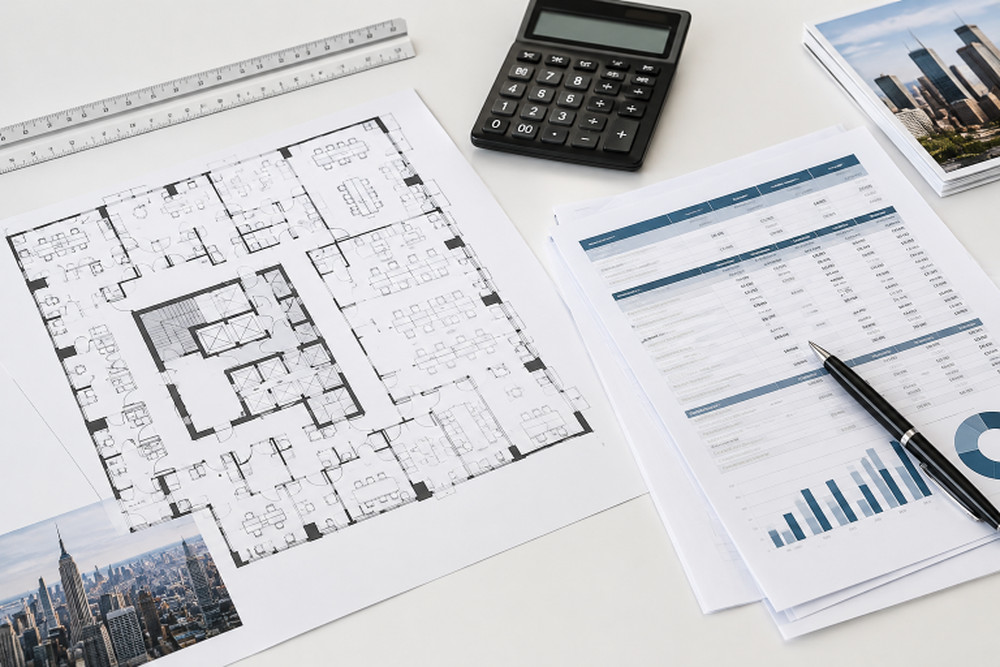
Two properties with the same rentable square footage can provide different amounts of workspace. Usable square footage is the area occupied exclusively by the tenant. Rentable square footage may include a proportionate share of common corridors, lobbies, restrooms, and amenity areas. Request measured floor plans, identify columns and irregular areas, and compare the cost per usable square foot when layouts differ.
A smaller office with an efficient layout may work better than a larger space with limited perimeter offices, awkward circulation, or insufficient meeting rooms. For retail, assess selling floor, back-of-house storage, fitting rooms, staff areas, and the practical path from deliveries to inventory.
Step 3: Calculate the Full Cost Over the Lease Term
Use the same calculation for every candidate space. This makes concessions and expense obligations easier to evaluate.
- Calculate annual base rent and scheduled rent increases.
- Add projected operating expenses, taxes, insurance, utilities, parking, and service charges.
- Add one-time costs, including deposits, legal review, design, permits, furniture, technology, construction, and moving.
- Subtract confirmed concessions, such as free rent or a tenant improvement allowance.
- Compare the estimated total cost for the entire initial term, not only the first month or year.
Keep a written comparison for each property with base rent, recurring expenses, one-time costs, concessions, escalation clauses, and the expected move-in date. Confirm whether the quoted expenses are based on current building estimates, a prior year, or a fixed amount.
Step 4: Evaluate Manhattan Office Space by Workplace Needs
For office users, test the space against the way people work. Consider private offices, shared workstations, meeting rooms, quiet rooms, reception, natural light, noise control, ventilation, elevators, building access, security, and after-hours policies. Confirm internet provider options, equipment needs, and whether the building can accommodate backup power or specialized technology when required.
Hybrid work can make flexibility especially useful. A layout that supports collaboration on busy days while allowing unused areas to serve multiple purposes may be more valuable than one designed around a fixed seating plan. Visit during the hours when employees arrive and leave to observe lobby congestion, elevator wait times, and nearby transit connections.
Step 5: Evaluate Retail Space by Customer and Operations Needs
Retail tenants should examine the storefront from a customer’s perspective and the back of house from an operator’s perspective. Review visibility from the sidewalk or street, storefront width, signage rights, pedestrian approach, vehicle access, nearby complementary businesses, delivery timing, trash procedures, storage, and permitted operating hours.
Confirm the proposed use before committing to a location. New York City’s zoning regulations governing land use and development are relevant to whether a particular use is allowed at a property. A tenant may also need to address licensing, building approvals, or agency requirements depending on the work and business type.
Check the physical infrastructure
A restaurant, salon, fitness facility, medical practice, or specialty retailer may need plumbing, ventilation, electrical capacity, grease management equipment, accessible routes, or other systems that a standard storefront does not provide. A busy corridor does not solve a space that cannot physically or lawfully support the operation.
Step 6: Inspect the Building, Improvements, and Timing
Inspect HVAC equipment, windows, elevators, restrooms, common areas, lighting, and signs of water intrusion or deferred maintenance. Ask about planned capital work, construction rules, and who is responsible for repairs or replacement. If alterations are needed, establish the scope of landlord work, tenant work, approval procedures, construction schedule, and the precise date rent begins.
Construction can affect an opening date, so budget for permit, design, furniture, technology, and relocation costs. The New York City Department of Buildings provides permit and certificate of occupancy information to help tenants understand which approvals may be relevant to a planned project.
Step 7: Protect Flexibility and Plan for Change
Review renewal options and notice deadlines, expansion rights, contraction rights, assignment and subleasing provisions, relocation clauses, early termination options, holdover rent, personal guarantees, and restoration obligations at move-out. A growing company may value expansion rights. A seasonal retailer may value a shorter initial commitment. A business facing uncertain staffing needs may need meaningful sublease rights.
Questions to Ask Before Signing
- What is the expected monthly and annual cost after all recurring charges?
- Which expenses can rise, and is there a cap on any increase?
- What space is usable exclusively by the tenant?
- Who repairs HVAC, plumbing, electrical systems, and storefront components?
- What improvements must be completed before occupancy?
- Can the tenant renew, expand, assign, or sublease later?
- What costs or duties apply at move-out?
Conclusion
The strongest Manhattan lease choice is not necessarily the space with the lowest quoted rent. It is the space that fits daily operations, provides a workable total cost, supports the intended use, and leaves the business with reasonable options for the future. Compare the financial terms carefully, align them with operational needs, and have qualified legal and financial professionals review the final documents before signing.