The Evolution of AI-Powered Media Production Across Modern Workflows
The way we create visual stories is changing fast. Artificial Intelligence (AI) is now a key part of media production. It helps us bring ideas to life on screen in new and exciting ways. This new era of AI-powered media production offers big chances for creators and studios.
AI tools are making every step of content creation better. They help from writing scripts to making final edits. This guide will show you the best AI tools and technologies being used today.
We will see how they improve efficiency, spark creativity, and help us connect with audiences. We will also explore how to keep our brand consistent and manage the new challenges AI brings.
Get ready to dive into the future of media, where innovation meets imagination.
The media landscape in October 2026 is fundamentally reshaped by AI, moving beyond simple automation to generative pipelines that actively participate in content creation. From the initial spark of an idea to the final broadcast, AI is integrating into every facet of the media production workflow. This transformation begins with generative AI’s ability to assist in script breakdown, identifying key elements, characters, and settings that inform subsequent production stages. We are seeing neural rendering techniques produce highly realistic visuals, while dynamic storyboarding tools allow for rapid visualization and iteration of scenes, significantly accelerating pre-production.
Synthetic voices, powered by advanced AI models, now offer a range of emotional nuances and linguistic capabilities, enabling multi-language localization and automated transcription with unprecedented accuracy. For instance, platforms like Emtek’s Vivi, leveraging advanced models such as Gemini 3.1, can analyze hours of footage and transform them into promotional assets within minutes, automating tasks that once took days. This capability extends to complex animation pipelines, where generative AI tools like Emtek’s VidioGen have demonstrated a remarkable 30% reduction in re-development time and costs for projects like the “New Keluarga Somat” animated series. This series, notably, became the number one local animated program during Ramadan 2026, achieving significant audience share growth.
Open-source initiatives like OpenMontage further illustrate this evolution, acting as an agentic video production system that orchestrates various AI tools. It can conduct live web research to inform scripting, generate diverse video formats from animated explainers to cinematic trailers, and even produce Ghibli-style anime animations for as little as $0.15, often without relying on video generation APIs. This holistic approach to content creation, encompassing everything from initial research to final render, highlights AI’s profound impact on enhancing efficiency, creativity, and personalization throughout the media production lifecycle.
Automated Pipeline Integration in AI-Powered Media Production
The true power of AI in media production lies in its ability to integrate and automate complex pipelines. This involves agentic orchestration, where AI agents manage and execute tasks across various stages, guided by sophisticated prompt engineering. Raw asset ingestion, traditionally a manual and time-consuming process, is now largely automated, with AI categorizing, tagging, and even enhancing media files.
Advanced AI techniques like inpainting and outpainting are revolutionizing visual production. Inpainting allows for the seamless removal or replacement of elements within a frame, while outpainting intelligently expands the boundaries of an image or video, generating new content that matches the existing style. Emtek’s VidioGen, for example, utilizes these generative AI capabilities to extend or edit frames without the need for costly reshoots, streamlining animation workflows.
Automated rough-cuts are another significant development, where AI analyzes footage, identifies key moments, and assembles preliminary edits based on predefined criteria or narrative structures. This dramatically reduces the time editors spend on initial assembly, allowing them to focus on creative refinement. OpenMontage exemplifies this agentic approach, boasting 12 production pipelines, 52 production tools, and over 400 agent skills. It can take a plain-language prompt and orchestrate the entire video creation process, from script generation informed by web research to the final render, demonstrating how AI can act as a comprehensive production assistant. Similarly, CreativeStudioOS emphasizes an “agent that drives the production and cannot approve its own work,” ensuring automation while maintaining human oversight. Even platforms like TikTok are leveraging AI to generate trend-inspired videos from simple product descriptions or URLs, automatically pulling assets and assembling engaging content for brands.
Post-Production Standardization and Audio Mastering
Beyond content generation, AI plays a crucial role in standardizing and optimizing the post-production phase, particularly in audio mastering and final delivery. Ensuring consistent quality across diverse media outputs is paramount, and AI-driven tools are now indispensable for tasks like loudness normalization, guaranteeing that audio levels meet industry standards such as EBU R128 compliance. This prevents jarring volume shifts between different segments or programs, a common issue in traditional broadcasting.
AI also excels in stem separation, intelligently isolating dialogue, music, and sound effects into individual tracks. This capability is vital for remixing, localization, and creating accessible versions of content. Automated dialog replacement (ADR) is becoming more sophisticated, with AI matching lip movements and vocal characteristics to new dialogue, whether for corrections or multi-language dubbing. Emtek’s Vivi platform, for instance, uses AI for transcription, subtitling, and dubbing, helping to preserve cultural nuances while speeding up global distribution.
Foley synthesis, the creation of everyday sound effects, is another area where AI is making strides, generating realistic audio cues to enhance immersion. Furthermore, AI assists in subtitle synchronization, ensuring captions perfectly align with on-screen action and dialogue, and in the meticulous preparation for broadcast delivery, adhering to specific technical specifications for various platforms. CreativeStudioOS exemplifies this end-to-end capability, delivering broadcast masters leveled to EBU R128, complete with timing sheet CSVs, SRT/VTT captions, and separate stems for dialogue, music, effects, and music & effects (M&E), ensuring a polished, compliant final product ready for air.
Solving Visual Continuity and Brand Integrity in Generative Video
One of the most significant challenges in AI-driven media production, especially for long-form or episodic content, is maintaining visual continuity and brand integrity. Early generative AI models often struggled with character consistency, leading to “style drift” where characters or environments subtly changed appearance across different shots or scenes. This “model hallucination” can break immersion and undermine a brand’s visual identity.
To counteract these issues, advanced AI systems employ techniques like asset grounding and the concept of “closed-world bibles.” These bibles define the visual parameters of a production—from character designs and costumes to set layouts and lighting profiles—ensuring that every AI-generated element adheres to a consistent style. Multi-scene coherence is achieved through sophisticated algorithms that track visual elements across an entire production, while deterministic seed control allows creators to generate content with predictable and repeatable outcomes. This level of control is crucial for episodic productions where characters and settings must remain consistent over many hours of content.
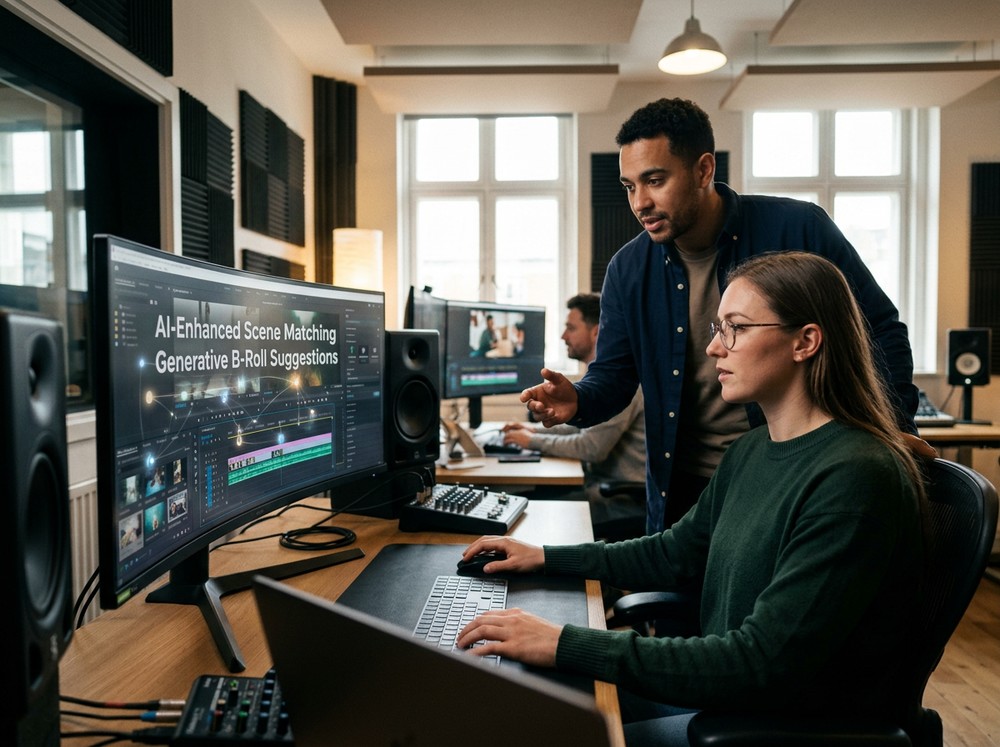
For example, CreativeStudioOS directly addresses this by using a “Closed-World Bible” that defines cast, sets, wardrobe, and voices once. Every generated shot is validated against this bible, and any deviation is rejected, ensuring that the master signed off is the master that airs. They even highlight how “a reference holds the face. Words don’t,” illustrating that providing a visual reference for a character ensures consistency far better than a textual description, which might lead to different interpretations by the AI. This meticulous approach is vital for preventing the visual discrepancies that can plague AI-generated media.
Closed-World Production Bibles and Reference Sheets
The “Closed-World Production Bible” is a cornerstone of maintaining visual consistency in AI-driven media. This concept involves creating a comprehensive digital repository that acts as the definitive source of truth for all visual elements within a production. It includes detailed specifications for facial embedding, ensuring character faces remain identical across different expressions and angles. Costume locking dictates precise attire, preventing variations that could signal a continuity error.
Reference sheets, often multi-angle and highly detailed, capture every aspect of a character or object. These sheets go beyond simple descriptions, incorporating specific lighting profiles, environmental anchors, and even camera parameters to guide AI generation. By implementing parameter freezing, certain attributes can be locked down, preventing AI models from introducing unwanted variations. This meticulous approach ensures shot-to-shot continuity, a critical factor for professional-grade media. CreativeStudioOS, for instance, operates on the principle that “your world is the asset,” meaning the defined parameters of the production bible are paramount, and the underlying AI model can be swapped out without compromising the established visual identity. This rigid adherence to a defined “world” ensures that characters, sets, and overall style remain consistent, even as AI models evolve or are interchanged.
Long-Context Architecture and Frame Preservation
Maintaining visual continuity isn’t just about static elements; it’s also about how AI handles sequences over time. This is where long-context architecture and frame preservation techniques become essential. Traditional AI models often process frames in isolation or short sequences, leading to a lack of temporal coherence. However, newer architectures leverage temporal attention mechanisms, allowing the AI to “remember” and reference previous frames and even entire scenes when generating new ones.
Latent caching and frame interpolation contribute to smoother transitions and consistent motion. Latent caching stores compressed representations of visual information, which can be quickly recalled to ensure that elements like character positions or object states remain consistent across cuts. Frame interpolation intelligently generates intermediate frames between keyframes, creating fluid motion where none existed before.
Visual memory and motion tracking capabilities enable the AI to understand and predict how objects and characters should move and interact within a scene, preserving their consistent appearance and behavior. Edge preservation techniques ensure that the outlines and details of objects remain sharp and consistent, while keyframe alignment helps to synchronize movements and actions across different takes or generated segments. Emtek’s use of the Gemini Enterprise Agent Platform, with its extended “long-context windows,” is a prime example of this. By allowing the AI to process and retain visual information over longer sequences, it significantly enhances the ability to maintain visual consistency across AI-generated frames, a crucial factor for the seamless integration of AI into complex animation and live-action workflows.
Infrastructure Economics and Model Orchestration
The adoption of AI in media production brings with it significant implications for infrastructure and operational economics. Running sophisticated AI models, especially for generative tasks like video creation, demands substantial computational resources, primarily GPUs. The choice of infrastructure—whether private cloud deployments, public cloud services, or hybrid models—directly impacts compute optimization, cost efficiency, and data security.
One of the key considerations is the cost associated with GPU utilization. CreativeStudioOS highlights a stark difference: a GPU worker on wake-on-demand costs approximately $25 per month when idle, compared to $520 per month for the same GPU left running around the clock. This illustrates the immense potential for savings through dynamic provisioning and wake-on-demand nodes, which only activate computational resources when actively needed for rendering or inference. This approach minimizes idle compute costs, ensuring that resources are utilized efficiently.
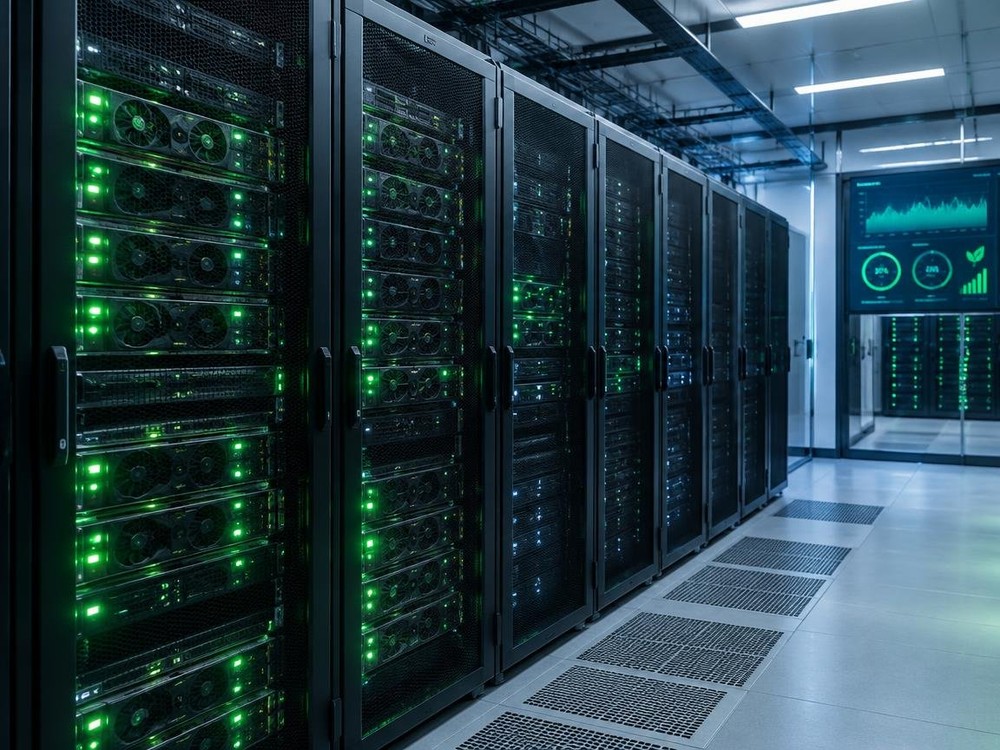
Effective render queue balancing is crucial for managing workloads and ensuring that productions meet deadlines without incurring excessive costs. AI-driven orchestration systems can dynamically allocate tasks to available GPUs, prioritizing critical renders and distributing the load efficiently. Furthermore, optimizing inference efficiency—the speed and cost at which an AI model processes new data—is paramount for large-scale production. Companies are increasingly looking for solutions that allow them to “own GPUs without paying for idle ones,” as CreativeStudioOS puts it, enabling them to scale their AI capabilities while maintaining tight control over expenditure. This focus on intelligent infrastructure management is central to making AI-driven media production economically viable and scalable.
Operational Cost Modeling and GPU Allocation
Managing the operational costs of AI-driven media production requires sophisticated cost modeling and precise GPU allocation strategies. The high cost of idle compute resources, particularly powerful GPUs, necessitates a shift from always-on infrastructure to more dynamic and responsive systems. Wake-on-demand nodes, as discussed, are a prime example, allowing resources to be provisioned only when a task is initiated, dramatically reducing monthly expenditures.
Beyond infrastructure, careful consideration is given to how AI models are deployed. Local model execution can offer cost advantages and enhanced data security for sensitive projects, as processing happens within a company’s own environment. However, many production pipelines also leverage cloud API routing to access specialized models or scale rapidly for peak demand. The key is to strike a balance between these approaches.
Budget governance and spend caps are critical mechanisms to prevent unforeseen expenditures. Platforms like CreativeStudioOS integrate cost estimation directly into the workflow, providing an estimate per segment before any rendering begins. This allows for approval processes where spend must be explicitly authorized, and budgets can be locked to prevent overspend. OpenMontage also features budget governance and cost estimates, ensuring that creators are aware of the financial implications before executing complex AI-driven tasks. This granular control over GPU allocation and model usage is essential for media companies navigating the economic complexities of AI integration.
Pipeline Architecture Comparison
When considering AI-driven media production, companies face a crucial decision regarding their underlying pipeline architecture. Each approach—private GPU clusters, wake-on-demand cloud nodes, and multi-model public APIs—offers distinct advantages and disadvantages in terms of cost, performance, and control.
| Feature | Private GPU Clusters | Wake-on-Demand Cloud Nodes | Multi-Model Public APIs |
|---|---|---|---|
| Compute Cost | High upfront, low recurring (if utilized) | Variable, optimized for usage (e.g., $25/idle, $520/full) | Pay-per-use, can be expensive for high volume |
| Render Latency | Low (dedicated resources) | Moderate (spin-up time) | Variable (network, API load) |
| Data Security | Highest (in-house control) | High (cloud provider security, private instances) | Moderate (data transmitted to third-party APIs) |
| Setup Complexity | High (hardware, software, maintenance) | Moderate (cloud configuration, integration) | Low (API keys, simple integration) |
| Flexibility | Limited by owned hardware | High (scale up/down as needed) | Highest (access to diverse, evolving models) |
| Model Choice | Any (local deployment, custom models) | Any (deploy custom models, or use cloud offerings) | Limited to provider’s offerings, often proprietary |
Private GPU clusters offer maximum control and data security, making them ideal for highly sensitive projects or companies with predictable, high-volume AI workloads. However, they demand significant upfront investment and ongoing maintenance. CreativeStudioOS, for example, can be deployed in any private cloud or data center, leveraging existing GPU resources.
Wake-on-demand cloud nodes, as highlighted by CreativeStudioOS’s cost metrics, provide a flexible and cost-effective middle ground. They allow companies to scale compute resources dynamically, paying only for what they use, while still offering a degree of control over the environment. This model is particularly attractive for fluctuating production demands.
Multi-model public APIs, such as those from Google, OpenAI, or other providers, offer unparalleled flexibility and access to cutting-edge AI models without the need for extensive infrastructure management. OpenMontage, for instance, can connect to various providers and even run without any API keys by leveraging free local tools, demonstrating a hybrid approach. While convenient and easy to set up, reliance on public APIs may introduce concerns regarding data privacy, vendor lock-in, and variable costs. The optimal choice depends on a company’s specific needs, budget, and strategic priorities.
Ethical Governance and Editorial Control in AI Workflows
As AI becomes more integral to media production, the ethical implications and the necessity for robust editorial control become paramount. The concept of “human-in-the-loop” is not merely a best practice but a fundamental requirement to ensure responsible AI deployment. This means that while AI can automate and generate content, critical decisions, and final approvals must always rest with human oversight.
Role-gated sign-offs are essential to establish clear accountability within AI-driven workflows. This ensures that specific individuals with appropriate authority review and approve AI-generated content at various stages. Digital likeness rights and talent agreements also become more complex in an era where AI can generate highly realistic synthetic media. Companies must navigate these legal and ethical landscapes carefully, ensuring explicit consent for the use of digital avatars or AI-generated likenesses.
Content provenance—the origin and history of media—is crucial for maintaining trust and combating misinformation. AI systems should be designed to record and verify the creation process, identifying which parts were AI-generated and which were human-created. Deepfake mitigation strategies are also vital to prevent the malicious use of generative AI. Furthermore, addressing algorithmic bias in AI models is an ongoing ethical challenge. Biases present in training data can lead to skewed or discriminatory outputs, requiring continuous monitoring and correction. CreativeStudioOS explicitly states, “Nothing airs without a named human decision,” and that “An agent that drives the production and cannot approve its own work,” underscoring the critical role of human judgment. They also clarify that using a real presenter’s face requires “consent and likeness authorisation,” highlighting the importance of legal and ethical compliance.
Operational Governance and Rights Management in AI-Powered Media Production
Effective operational governance and robust rights management are non-negotiable in AI-driven media production. Companies must establish clear audit trails for all AI-generated content, detailing the models used, parameters applied, and human interventions made. This transparency is vital for accountability and for resolving any disputes regarding content origin or intellectual property.
Copyright clearance for AI-generated assets, especially when models are trained on vast datasets, presents a new legal frontier. Media companies must ensure that their use of AI-generated content complies with existing copyright laws and that they have appropriate model licensing agreements in place. Biometric consent is increasingly relevant for any AI application involving facial recognition or synthetic likenesses, requiring explicit permission from individuals.
Metadata tagging plays a crucial role in managing AI-generated assets, allowing for easy identification, tracking, and compliance verification. This includes tagging content with information about its AI generation, usage rights, and any associated talent agreements. Editorial sovereignty must be maintained, meaning that human editors and creative directors retain ultimate control over the narrative, tone, and cultural authenticity of the content. As Emtek advises, it’s essential to “maintain human oversight on narrative and cultural authenticity when using AI.” This blend of technological prowess and stringent governance ensures that AI serves as an enhancement to, rather than a replacement for, human creativity and ethical responsibility.
Frequently Asked Questions About AI Video Production
The rapid evolution of AI in media production naturally leads to many questions from creators, studios, and consumers alike. Here, we address some of the most common inquiries regarding the practical application and implications of AI video production in October 2026.
How does AI maintain character continuity across complex scenes?
Maintaining character continuity across complex scenes is a sophisticated challenge that AI-driven production systems are increasingly mastering. The key lies in utilizing multi-angle reference sheets and the concept of “closed-world production bibles.” These bibles act as a definitive blueprint, defining every visual aspect of a character, from facial features and expressions to costumes and even specific lighting profiles. AI models are conditioned with these references, ensuring that regardless of the scene, angle, or action, the character’s visual identity remains consistent.
Techniques such as latent conditioning and facial seed locking are employed to embed a character’s unique features into the AI model’s generation process. This means that instead of generating a character from scratch for each shot, the AI draws upon a consistent underlying representation. Platforms like CreativeStudioOS explicitly validate every generated shot against a pre-defined “Closed-World Bible,” rejecting any deviation to ensure that the character’s appearance is meticulously preserved throughout the entire production. Furthermore, advanced AI architectures, such as those leveraging long-context windows like Emtek’s Gemini Enterprise Agent Platform, allow the AI to “remember” and reference visual information from previous frames and scenes, ensuring a coherent visual narrative across extended sequences.
What are the primary cost advantages of automated media pipelines?
Automated media pipelines offer significant cost advantages, primarily by streamlining traditionally labor-intensive and resource-heavy processes. One major benefit is compute optimization, where AI systems intelligently manage computational resources, such as GPUs. This includes wake-on-demand GPU scaling, which dynamically provisions resources only when actively needed, drastically reducing idle compute costs. As an example, CreativeStudioOS highlights that a wake-on-demand GPU worker costs approximately $25 per month when idle, compared to $520 per month for an always-on GPU.
Beyond infrastructure, these pipelines lead to reduced reshoot frequency. By generating and iterating on content virtually, or by using AI for inpainting and outpainting to correct errors, the need for costly physical reshoots is minimized. This was evident with Emtek’s “New Keluarga Somat” animated series, which saw a 30% reduction in re-development time and costs thanks to AI tools. Accelerated post-production cycles also contribute to savings, as tasks like automated rough-cuts, transcription, subtitling, and audio mastering are completed much faster. This efficiency translates directly into lower per-minute render expenses and overall production costs, allowing studios to produce more content within the same budget or achieve significant savings on existing projects. OpenMontage also demonstrates this, producing a Pixar-style animated short for just $1.33 and a Ghibli-style animation for $0.15.
How do studios maintain editorial authority over autonomous AI tools?
Maintaining editorial authority over autonomous AI tools is a critical concern, and studios address this through a combination of technological safeguards and strict workflow protocols. The fundamental principle is “human-in-the-loop,” ensuring that while AI can generate and automate, humans retain ultimate decision-making power.
This is primarily achieved through named human approvals and role-gated workflows. Every significant output from an AI system, whether it’s a script draft, a visual render, or a final cut, requires explicit approval from a designated human editor or creative director. Platforms like CreativeStudioOS are built with this in mind, explicitly stating that “nothing airs without a named human decision” and that the AI agent “cannot approve its own work.” This separation of duties prevents the AI from autonomously publishing or distributing content without human oversight.
Deterministic parameter limits are also put in place, allowing human operators to set boundaries and constraints for AI generation, guiding its creative output while preventing unwanted deviations. Manual override controls provide the ability to intervene and adjust AI-generated content at any stage. Furthermore, strict sign-off checklists ensure that all editorial, brand, and ethical guidelines are met before content proceeds to the next stage or final release. This multi-layered approach ensures that AI serves as a powerful assistant, amplifying creative capabilities, while human artists and editors retain full editorial sovereignty and creative control.
Conclusion
The journey into AI-driven media production reveals a landscape of immense potential and transformative change. From generative pipelines that automate script breakdown and neural rendering to sophisticated post-production tools ensuring EBU R128 compliance and seamless localization, AI is fundamentally altering how stories are brought to life on screen. We’ve seen how innovations like “closed-world bibles” and long-context architectures are solving critical challenges in visual continuity, ensuring brand integrity across complex, episodic productions.
Economically, AI offers significant advantages, with compute optimization and wake-on-demand GPU scaling dramatically reducing operational costs. The ability to generate high-quality content for fractions of traditional expenses, as demonstrated by OpenMontage’s ultra-low-cost productions or Emtek’s 30% cost reductions, underscores the financial viability of these technologies. However, this evolution is not without its challenges. Ethical considerations surrounding data quality, bias, privacy, and workforce adaptation demand careful attention, necessitating robust governance frameworks and a commitment to human oversight.
The future of media production lies in hybrid workflows where AI acts as a powerful amplifier of human creativity. It enables technical agility, scalable output, and unprecedented personalization, allowing human artists to focus on the art of storytelling while automation handles the heavy lifting. As we look towards the next wave of innovation, companies that strategically embrace AI, balancing automation with human artistry and ethical responsibility, will be best positioned to thrive in this exciting new era of media transformation.