Concrete has a reputation for being the dependable neighbor of construction materials. It does not complain, take vacations, or demand much attention. Still, even the toughest slab has a weakness: water that lingers where it should not.
Concrete can withstand traffic, equipment, temperature changes, and dropped tools. A constant supply of moisture with no escape route challenges it. Water under a slab is like an uninvited guest who rearranges the furnishings. It moves dirt, removes tiny particles, expands in cold temperatures, and enters stable places.
Good drainage gives concrete a fighting chance. It keeps runoff moving, protects the supporting layers, and reduces the amount of time water spends attacking joints and edges. Drainage is not merely about preventing puddles that annoy pedestrians. It is about preserving the entire system beneath the surface.
A Slab Is Only as Stable as What Supports It
Concrete may look like one solid object, but it works as part of a layered assembly. Beneath the slab are compacted soil, aggregate, and sometimes additional drainage or reinforcement materials. Each layer has a job. If water weakens one of them, the slab above begins to lose its dependable footing.
Imagine placing a dinner plate on a firm table. It sits quietly. Now replace the table with a tray of damp sand. The plate may look fine at first, but a little pressure creates movement. Concrete behaves in a similar way when its base loses density or washes out.
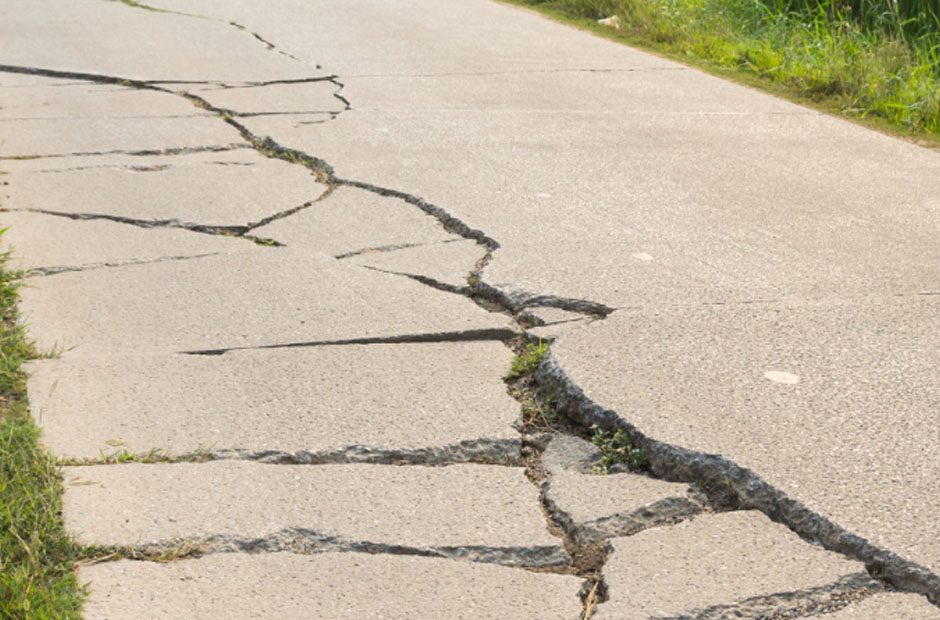
Runoff can enter through joints, cracks, slab edges, and poorly sealed transitions. As it travels below the surface, it may carry small soil particles with it. These particles leave behind tiny voids. Vehicles then press on the slab, the slab bends slightly, and those voids become larger. The result may be settlement in one corner, rocking under tires, or a crack that seems to appear overnight after months of hidden trouble.
This is why filling a crack without examining the supporting layers often produces a temporary victory. The repair may look excellent for a season, while the unstable base continues its quiet work below.
Traffic Makes Drainage Problems More Aggressive
A puddle in a quiet garden is one thing. A puddle in a delivery lane is a completely different character. Every tire passing through it creates pressure and movement. Water splashes against joints, gravel, curbs, and nearby surfaces. Heavy trucks add a generous dose of force to the recipe.
Frequent traffic can fill and drain fissures. This movement eventually enlarges apertures with dirt. Vehicle tires turning in loading regions cause tension. Although a truck weighs several tons, its tires do not roll straight and leave. They twist, pause, reverse, and pivot, straining weaker parts.
Poor drainage also creates slippery conditions and hides surface defects. A shallow depression may be difficult to notice during a dry inspection, yet it can become a wide reflective pond after a storm. Drivers may brake suddenly, pedestrians may step around it, and maintenance crews may begin a recurring battle with squeegees that never quite win.
The more often a paved area carries traffic, the less room there is for water to remain untreated. High use demands deliberate collection and reliable discharge.
Grade Should Guide Water Instead of Confusing It
Surface slope is one of the quiet heroes of durable paving. A well shaped surface encourages runoff to move toward a planned collection point. A poorly shaped surface sends water on a sightseeing tour across the property.
Small changes in elevation can have large effects. A raised edge may block flow. A new curb may redirect water toward a building. A resurfacing project may leave an old inlet slightly lower or higher than the surrounding pavement. Even a thin layer of accumulated soil can alter the route of runoff.
Water follows the easiest path, which is often not the path a site owner intended. It may run toward a foundation, gather beside a wall, or settle at the lowest joint. Once there, it waits patiently for the next storm to refill the same location.
Effective grading considers more than the slab itself. Nearby lawns, roofs, driveways, curbs, ramps, and landscaped areas all contribute runoff. A concrete pad may be correctly sloped, yet still receive water from a larger section of the property. Drainage planning must account for the entire flow area rather than treating each paved section as an isolated island.
Catch Basins Give Runoff a Clear Destination
A catch basin acts as a controlled doorway for surface water. Instead of allowing runoff to spread across a broad area or gather against an edge, the basin receives it and directs it into a drainage line or approved discharge area.
The value of a basin depends on more than its size. Its grate must be appropriate for the traffic and conditions around it. A basin in a pedestrian courtyard has different demands than one in a warehouse lane filled with forklifts and delivery trucks. The surrounding pavement must also meet the inlet at the correct elevation so water can enter rather than glide past like a customer ignoring a store window.
Location matters just as much. Basins are commonly placed near low points, at the bottom of slopes, beside broad paved areas, and where runoff changes direction. Multiple collection points may be necessary when a large surface has several drainage paths.
The area around the basin deserves careful construction. If the surrounding concrete is thin, poorly compacted, or unsupported, the inlet can become a weak spot. Cracks may form around the frame, and the basin may settle below the pavement. A drainage component should collect water without becoming the next source of trouble.
Joints Need Protection From Constant Saturation
Joints allow concrete sections to move without tearing themselves apart. They are essential, but they are also common entry points for water. When joints remain damp for long periods, their filler or sealant can deteriorate. Debris enters the opening, weeds may appear, and the edges begin to chip.
A damaged joint can act like a tiny funnel. Water slips through, reaches the base, and begins weakening the support beneath adjacent slabs. During cold weather, trapped moisture can freeze and expand. When temperatures rise, the ice melts and leaves a small gap. Repeated cycles gradually turn that gap into a larger defect.
Keeping joints clean and in suitable condition helps, but joint maintenance cannot compensate for a site that continually sends water toward them. Sealants are not magical raincoats for an entire pavement system. They are one part of a broader water management plan.
Freeze and Thaw Cycles Turn Moisture Into a Wedge
In regions where temperatures move above and below freezing, drainage becomes even more important. Water expands when it freezes. If that water occupies cracks, pores, or spaces beneath the slab, the expansion exerts pressure on surrounding material.
One cold incident may not change anything. Long winters with cycles are harder. Cycles can expand cracks, elevate slab edges, and release surface particles. The softened foundation may lose support while thawing. Vehicles pass over a partially elevated, partially weakened, and generally terrible morning surface.
Good drainage reduces the amount of water available for freezing beneath the pavement. It cannot eliminate every seasonal stress, but it can prevent a manageable climate challenge from becoming a yearly demolition project.
Maintenance Keeps Drainage From Losing Its Manners
Drainage systems need routine attention because runoff carries leaves, soil, gravel, litter, and other small travelers. A basin that once accepted water quickly may become partially blocked. When that happens, the collection point may overflow or force water toward areas that were never designed to receive it.
Inspections are especially useful before wet seasons and after major storms. Look for standing water, sediment rings, clogged grates, displaced covers, washed out soil, and new cracks near collection points. A basin that is full of debris is not performing its job, no matter how impressive it looked on installation day.
Vegetation might disclose moisture issues also. Where water stays longer than planned, moss, algae, and weeds grow. Runoff may cause dark stains along one edge. These indications don’t reveal every fault, but they reveal water’s path.
Cleaning should be paired with observation. If the same area fills with water after every storm, removing debris may provide only a brief improvement. The grade, outlet, capacity, or surrounding support may require closer attention.
FAQ
Can a strong concrete mix prevent drainage related damage?
A strong mix improves resistance to many forms of wear, but it cannot correct unstable soil or trapped water beneath the slab. Concrete strength is important, yet performance also depends on proper support, slope, joints, collection points, and maintenance.
Why does water collect beside a concrete edge?
Water may be reaching the edge from an uphill surface, or the edge may be lower than the surrounding pavement. Settlement, landscaping changes, blocked inlets, and added curbs can also redirect runoff toward the slab boundary.
How can a property owner recognize drainage trouble early?
Recurring puddles, muddy areas beside the slab, sediment deposits, moss growth, exposed aggregate, widening joints, and cracks that return after repair are useful warning signs. A rocking slab or a corner that sits lower than nearby sections deserves prompt attention.
Are catch basins useful in areas with heavy vehicle traffic?
Yes, when they are selected, placed, and installed for the expected loads. The grate, frame, basin structure, surrounding concrete, and outlet all need to suit the traffic environment. A lightweight unit in an industrial lane may become damaged quickly.
Why do repairs fail in the same location?
Repeated failure often means the underlying water movement or support problem remains unchanged. A patch can cover the visible defect, but runoff may still be entering the base, softening soil, or concentrating pressure at the same joint.
Should drainage be inspected after a paving project?
Yes. New pavement, curbs, ramps, landscaping, and building additions can alter runoff routes. A site that drained properly before construction may develop new low points or send water toward areas that were previously dry.