Minor deck problems can include a cracked board or loose fastener. Contacting a deck repair professional is ideal when damage affects posts, joists, stairs, or other structural components. Issues in these areas sometimes indicate problems that are not visible from the surface; this could include water damage or wood rot. Here are a few reasons to call a professional for deck repair or replacement:
Inspect Structural Supports
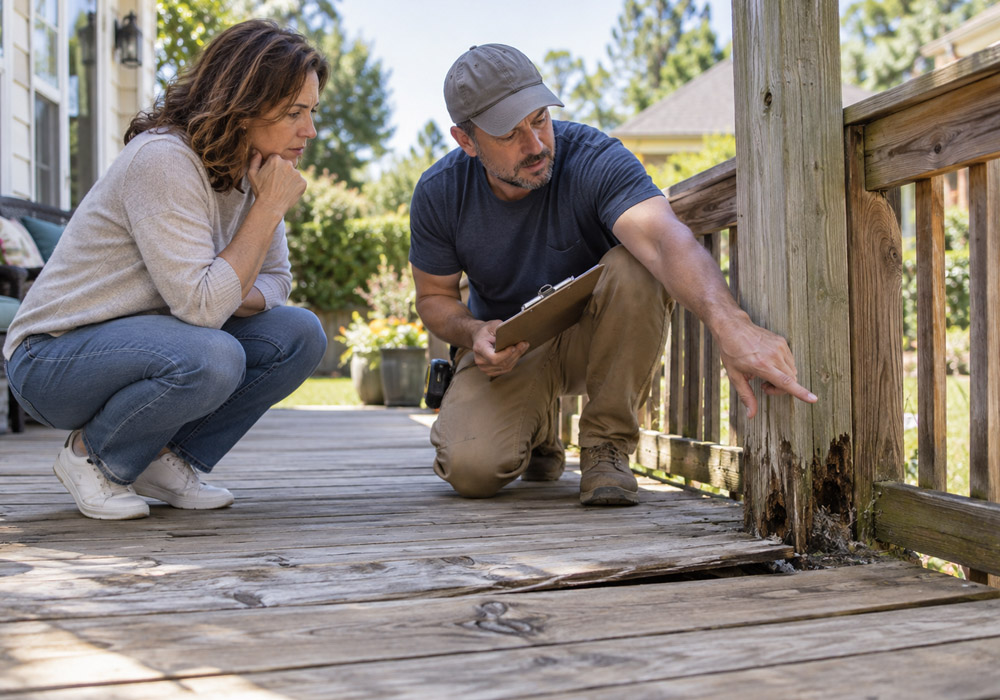
Movement beneath your deck deserves attention when support components no longer remain stable. Posts carry the structure’s weight, while joists support the decking above. Rot around post bases or footings can affect how those components perform; professional inspection helps identify whether visible movement is connected to deeper framing damage.
Joists require closer attention when boards above them show widespread deterioration. Replacing damaged decking alone leaves underlying problems untouched if supporting wood has also deteriorated. When weakened joists no longer provide consistent support, your deck may develop uneven areas. Structural repairs become relevant when damage extends beyond the walking surface.
Post bases provide another useful inspection point when moisture has affected the surrounding wood. Footing stabilization addresses conditions below the visible deck, while joist inspection examines supporting framing. Accessing those components requires more than replacing a damaged surface board. A professional assessment can provide a clearer picture of the affected structure, and it helps determine which repairs are necessary.
Repair Deck Railings
Loose railings deserve attention when tightening hardware does not stop movement, and connections between railings and deck framing require inspection when instability continues. Worn hardware also needs replacement when fasteners no longer hold components securely. The following signs may be reasons for a professional assessment:
- Unstable handrails require inspection at their attachment points.
- Loose connections indicate movement between railing components.
- Damaged hardware affects how securely railings remain attached.
- Worn fasteners may require replacement rather than tightening.
- Movement near framing points warrants examination of the structure beneath the railing.
Restore Deck Stairs
Damaged stair treads affect the walking surface, while deteriorated risers compromise each step’s structure. Moisture exposure may also weaken stair components, even when they appear intact from above, and loose connections provide another sign that several stair components require examination. Professional deck repair becomes relevant when damage extends beyond a single replaceable tread.
Replace Damaged Boards
Some signs indicate that your deck has a larger problem, such as several boards that have rotted. Split boards allow moisture to penetrate nearby materials. One damaged board may be an isolated problem, but if there is widespread deterioration, the issue should be inspected more closely. When it comes to replacement material, it’s key to match the new boards to the existing decking to keep the surface consistent.
Water exposure affects wood differently depending on the location and duration of moisture, so the extent of the damage sometimes varies. If the wood on the boards is being damaged repeatedly, it can indicate that water is reaching the deck again. Professional service offers you the opportunity to inspect nearby materials during replacement and find the source of the problem, such as broken gutters.
Schedule a Professional Deck Repair
A deck inspection provides useful information about damage that remains hidden beneath visible surfaces. When posts, joists, stairs, and drainage are evaluated together, they can provide a more complete picture of your deck’s condition. That broader assessment helps separate isolated repairs from problems affecting several connected components. Contact a qualified deck repair professional to assess your deck and discuss the appropriate repairs for its condition.