A backyard retreat in Northern Virginia should feel useful on an ordinary Tuesday evening as well as during a weekend gathering. Whether the property is in Aldie, Ashburn, Leesburg, Fairfax, or a nearby community, thoughtful planning can turn a patio, lawn, deck, or side yard into an outdoor extension of the home. Homeowners considering custom decks Northern VA can start by thinking beyond the deck itself and planning how it will connect with shade, planting, seating, paths, and the rest of the landscape.
Year-round comfort matters in this region because outdoor spaces face changing conditions. Summer afternoons can be warm and humid, storms can bring heavy rain, and winter weather can leave exposed surfaces cold and slick. A successful retreat does not need every possible feature. It needs a layout that makes daily use easy in every season.
Start With the Main Purpose
Before choosing pavers, furniture, or a fire feature, write down the three most important ways the yard should serve your household. Perhaps the priority is family dinners, quiet morning coffee, a safe place for children to play, or a comfortable setting for hosting friends. This simple exercise keeps the project centered on real habits instead of trends.
Also consider who will use the space most often. A couple who enjoys relaxed evenings may need a sheltered lounge area, while a household that hosts often may benefit from a larger dining zone and clear circulation from the kitchen. Separate essential needs from optional upgrades, then leave some open space for future changes.
Divide the Yard Into Outdoor Rooms
Even a compact Northern Virginia yard can feel organized and spacious when it has clear zones. These areas do not need walls. Changes in surface material, furniture arrangement, planters, lighting, or planting beds can define each purpose.
Dining and Cooking Areas
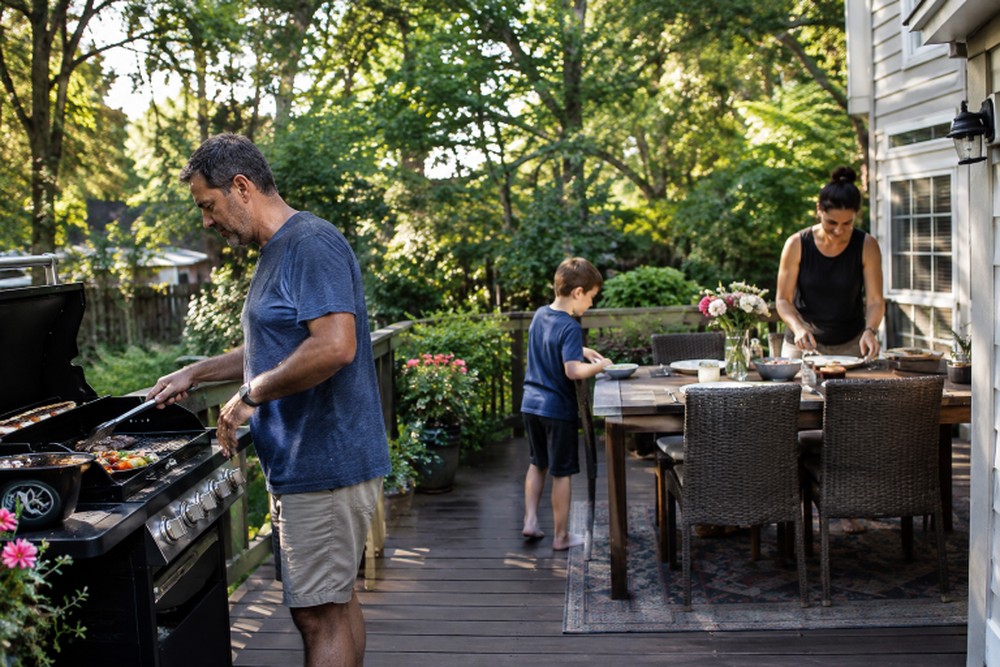
Place the dining area close to the kitchen whenever possible. Shorter trips make outdoor meals easier, especially when carrying food, dishes, and drinks. If grilling or preparing food outdoors is important, allow room for safe clearance around the cooking equipment, a landing surface for trays, task lighting, and storage for tools.
Lounge, Quiet, and Activity Areas
Set lounge seating around a focal point, such as a garden view, fire feature, or water element. A quieter corner can include a bench, small table, or hammock away from the busiest part of the yard. Keep a flexible open area if children, pets, lawn games, or exercise are part of everyday life.
Plan for Sun, Shade, and Weather
Spend several days observing the property before finalizing the layout. Note where morning, afternoon, and evening sun falls, as well as where wind moves through the yard and where water settles after rain. Afternoon shade is especially valuable for seating areas that will be used in summer.
Use a combination of solutions rather than relying on one large umbrella. Pergolas, covered patios, shade trees, retractable screens, and movable umbrellas can each serve a different location or season. Covered spaces should still allow air movement so they do not feel enclosed during humid weather. Position seating away from downspout discharge, low spots, and strong wind corridors.
Choose Materials for Real Life
Outdoor materials should be selected for traction, durability, appearance, and the care they require. Walkways and patios need surfaces that are comfortable underfoot and provide reasonable grip when wet. Furniture should suit both the local weather and the available storage space. Outdoor fabrics that resist moisture and fading can reduce the need for frequent replacement.
When comparing options, use a simple checklist:
- How will the material look beside the home’s exterior?
- How will it handle rain, leaves, snow, and seasonal temperature changes?
- How often will it need cleaning, sealing, covering, or repair?
- Can it be safely used by children, guests, and pets?
- Does its long-term upkeep fit the household’s budget and schedule?
Extend the Outdoor Season
A few well-chosen features can make the yard more inviting during cool evenings and shoulder seasons. Covered seating protects people and furnishings from light rain. A properly placed fire feature can create a natural gathering point, while weather-rated lighting makes the space usable after sunset. Store blankets, cushions, games, and grilling tools nearby so the area is easy to enjoy without repeated trips indoors.
Any heating or fire feature should be chosen and installed with the required clearance, ventilation, and local code considerations in mind. Keep access routes open and avoid locating heat sources where low branches, overhead structures, or loose fabrics could create a hazard.
Use Plants for Privacy, Beauty, and Drainage
Planting gives an outdoor room softness and seasonal character, but it can also provide screening, shade, and visual separation. Combine evergreen structure with flowering perennials, grasses, shrubs, or small trees for interest beyond a single season. Choose each plant according to the actual light, soil, moisture, and space available, rather than selecting only for its appearance at the garden center.
In areas that receive runoff from roofs or hard surfaces, a carefully designed rain garden can temporarily collect stormwater runoff and allow it to soak into the ground. It should be located and designed for the property’s drainage pattern, not treated as a decorative feature added after the patio or paths are complete.
For planting beds throughout the retreat, locally appropriate species can make maintenance more manageable when they are matched to site conditions. Resources on native plants for the home landscape can help homeowners explore choices for sunny, shady, dry, or moist areas.
Layer the Lighting
Outdoor lighting works best in layers. Path lighting helps people move safely between the house, deck, gate, and seating areas. Task lighting supports grilling and food preparation. Soft ambient lighting makes dining and lounging more comfortable, while accent lighting can highlight a specimen tree, stone wall, or planting bed. Timers, dimmers, and efficient fixtures simplify operation and help prevent lights from being left on unnecessarily.
Plan Drainage, Storage, and Maintenance Early
Good-looking projects can become frustrating when practical details are overlooked. Identify low points, downspouts, and areas where water already collects before adding hardscape. Preserve room to clean surfaces, trim shrubs, access utilities, and move furniture. Include storage for cushions, garden tools, toys, and cooking equipment so the retreat remains orderly.
Create a seasonal care routine. Spring may involve checking drainage and cleaning hard surfaces. Summer can include pruning, watering new plantings, and inspecting lighting. Fall is a good time to clear leaves and store cushions, while winter may require protecting sensitive containers and checking surfaces after freeze-thaw cycles.
Build the Retreat in Phases
- Measure the yard and record sun, shade, slopes, drainage, and existing utilities.
- Rank features by daily value, beginning with drainage and circulation.
- Create a complete site plan, even if construction will happen over several seasons.
- Complete structural work first, including grading, drainage, patios, decks, walls, and utility lines.
- Add planting, furniture, lighting, and decorative details as later phases.
Conclusion
The best Northern Virginia backyard retreat is not necessarily the largest or most elaborate. It is a space that supports the people who use it, handles local weather thoughtfully, and remains easy to maintain. By planning the layout, comfort features, materials, plants, lighting, and drainage as one connected system, homeowners can create an outdoor setting that feels welcoming in every season.